I’ve been lucky to have had a restless curiosity about the details that make a time or place memorable.
So often, these experiences take place around a table of food.
I have been honored to have stumbled into this crazy world myself: starting as a dishwasher at fifteen, then serving, bartending, and eventually operating and managing.
For years, I saw my main source of income as a temporary gig. I wish I had paid closer attention to the beautiful details already surrounding me.
As humbly as possible, this is a love letter to the art that gave me a home.
— Jacob, Blank Discovery
LDU — Dallas, TX
The morning coffee is an American working-class delicacy. It may fix or break the first 4 hours of your day. We have become reliant on this simple pleasure (and that’s okay!).
I fell sucker for this little gem the moment I finally stepped in. I had seen many athleisure’d women storming in and out of the brick corner building each day I passed by en route to my old apartment in Lower Greenville. I was ignorant.
It was buzzing and full of life: full of character and characters, full of great coffee smells and always some Katy Trail walker’s dog. The entire store is made of this Japanese-style plywood furniture while being far from fancy or snooty. It’s a utilitarian dream: homey and efficient.
The team there moves like a grown-up version of the kids from School of Rock. They are compassionate and distinct in personality. Dozens of coffees are ordered and delivered by hand to store-goers each minute, and still each guest is made to feel seen.
None of this matters if the coffee is okay.
I love the coffee here. It’s that Italian-style medium-dark roast from a pair of Australian twins.
It made my day for the next four years, every single day, sometimes twice or more. Their products are very much consistent and always honest. My first love was the iced “boss,” which is essentially an iced cortado. They may be the only coffee shop in America that won’t give you a corny lecture or a look for ordering one. Oh, and the banana bread’s a day-warmer.
Get a cappuccino. Get an iced coffee, 20 oz, every day. Order your wife an iced matcha with vanilla and almond milk and drink most of it. You will have enjoyed one of the simplest pleasures of Dallas if you have followed my instruction.
This space will always be held extremely dear to me. It is both the comforting and outgoing friend you rely on, and often need.
Be good to the staff and it will make your quality of life increase by 35%.
Thank you, LDU.
— Jacob, Blank Discovery
Father, give me only what I need today.
Lord, thank you for the humility you offer me.
Allow me humility today.
Lord, thank you for your peace.
Allow me peace today.
Lord God, thank you for the love you offer me.
Allow me to love today, Jesus.
Lord, thank you for your gift.
Allow me to give today.
Lord, thank you for your guidance.
Allow me to lead today.
Jesus, thank you for your life.
Allow me to live today.
Jesus, Son of God,
have mercy on me, a sinner.
Today, I am born again.
In your name, I ask that you watch over me
and surround me in your safety.
In the name of the Father,
and of the Son,
and of the Holy Spirit.
Amen.
— Jacob, Blank Discovery
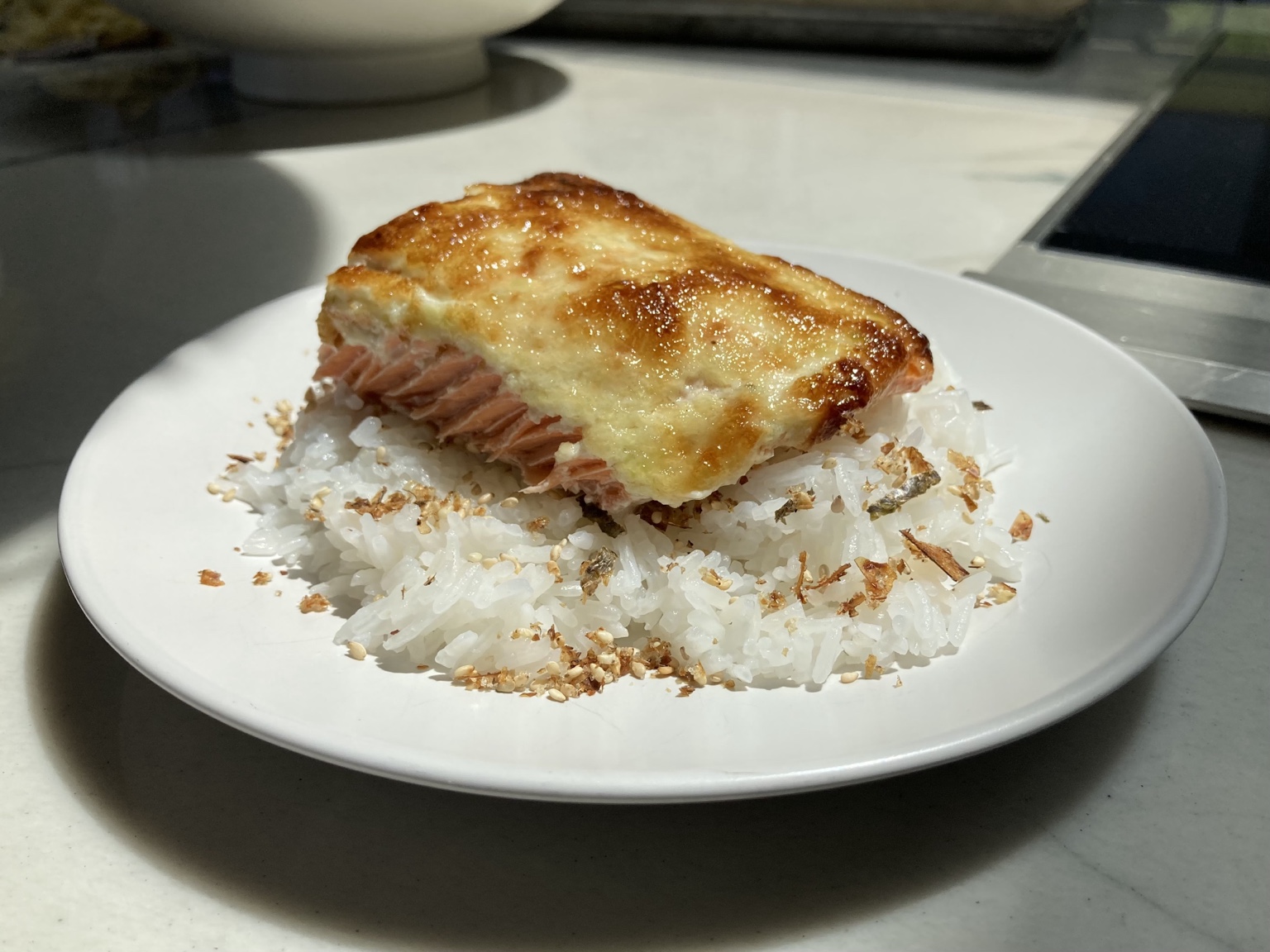
Baked salmon / wasabi mayo
About 1 pound of salmon (yields about 4 servings)
4–5 ounces mayonnaise
½–1 ounce wasabi
½ teaspoon agave (approximately 0.1 ounce by weight)
Bake at 350°F for 15 minutes. Broil at 450°F for 5 minutes, rotating the tray or foil after 2 minutes 30 seconds.
Serve over white rice. I enjoy a bit of Katsuo Fumi furikake on the rice as well.
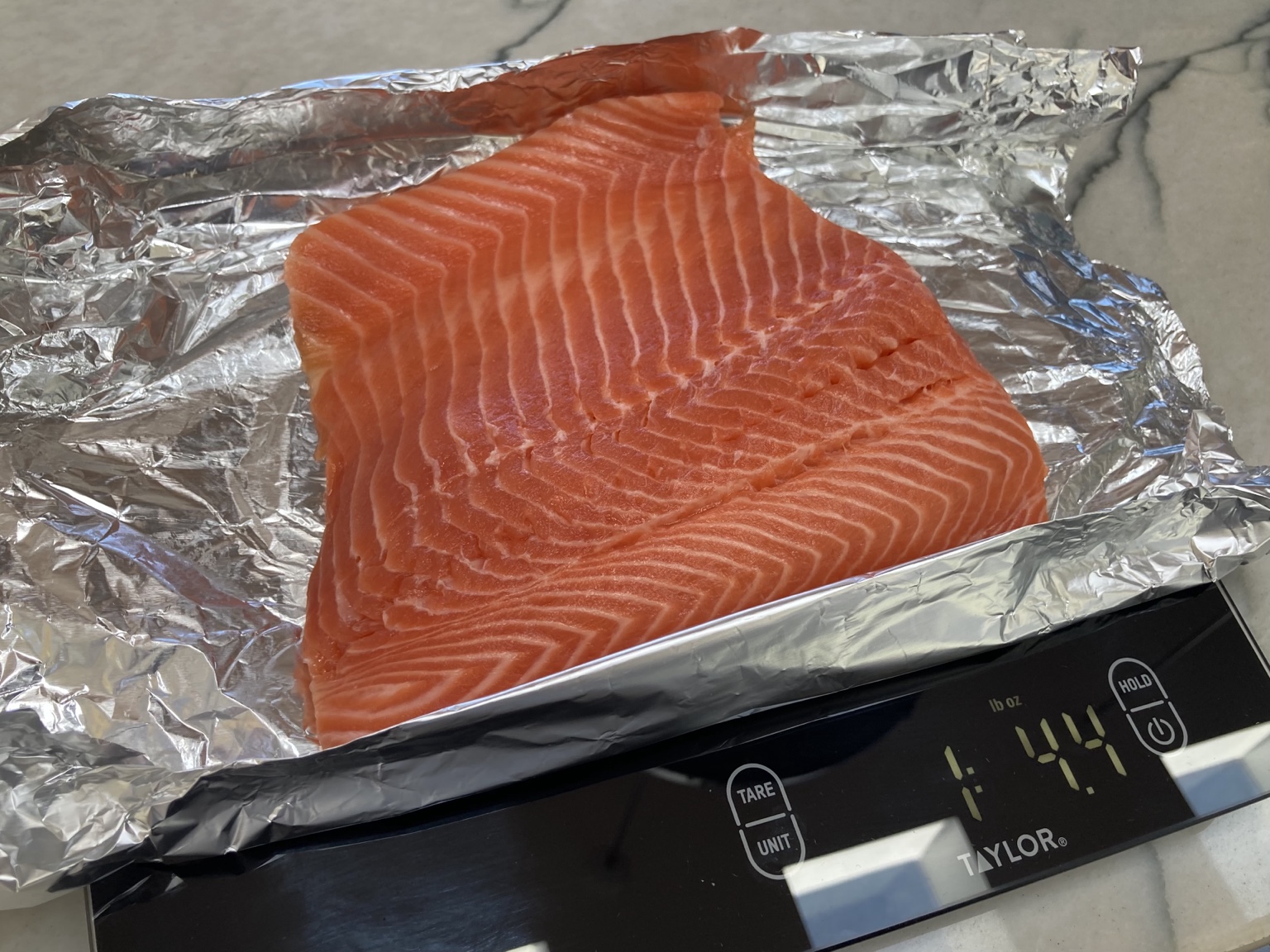
Start with about 1 pound of salmon on foil or a foil-lined pan.
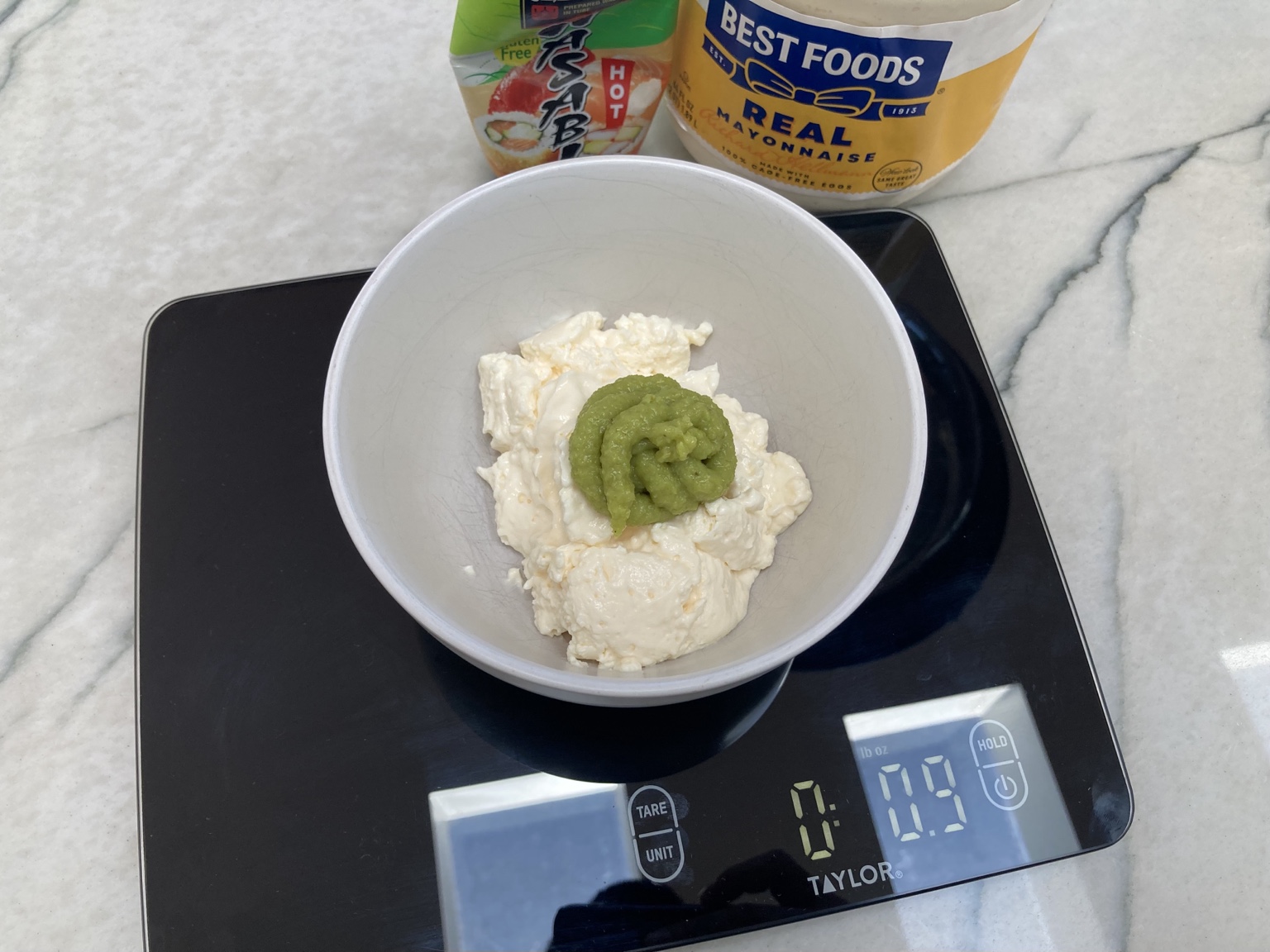
Mix 4–5 ounces of mayonnaise with ½–1 ounce of wasabi.
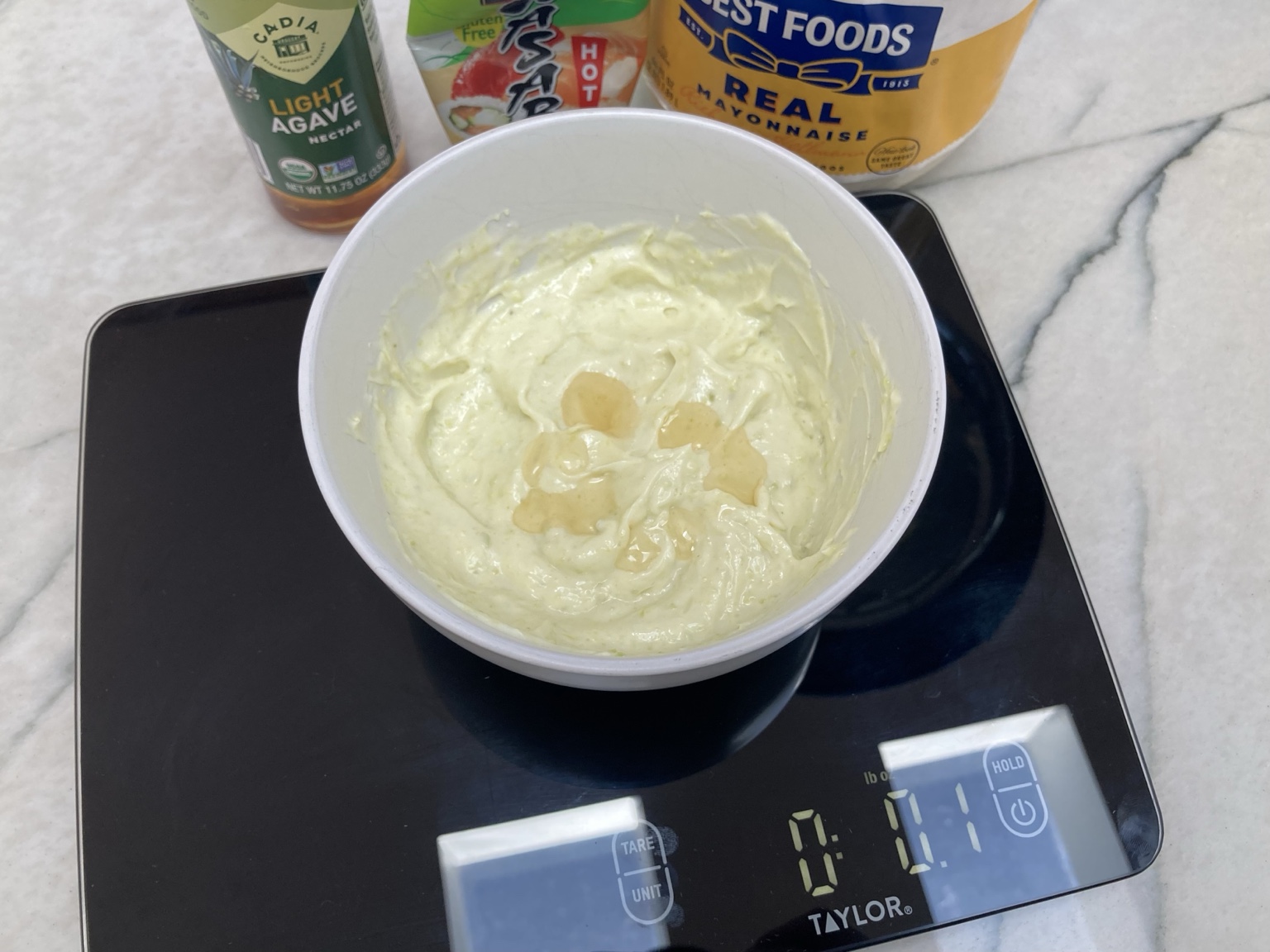
Add ½ teaspoon of agave and mix until smooth. A tiny touch of agave allows the wasabi to shine without any unpleasant burn.
Honey works in place of this as well. Just remember to add a little at a time and taste. This recipe is very forgiving, so adjust it to your liking.
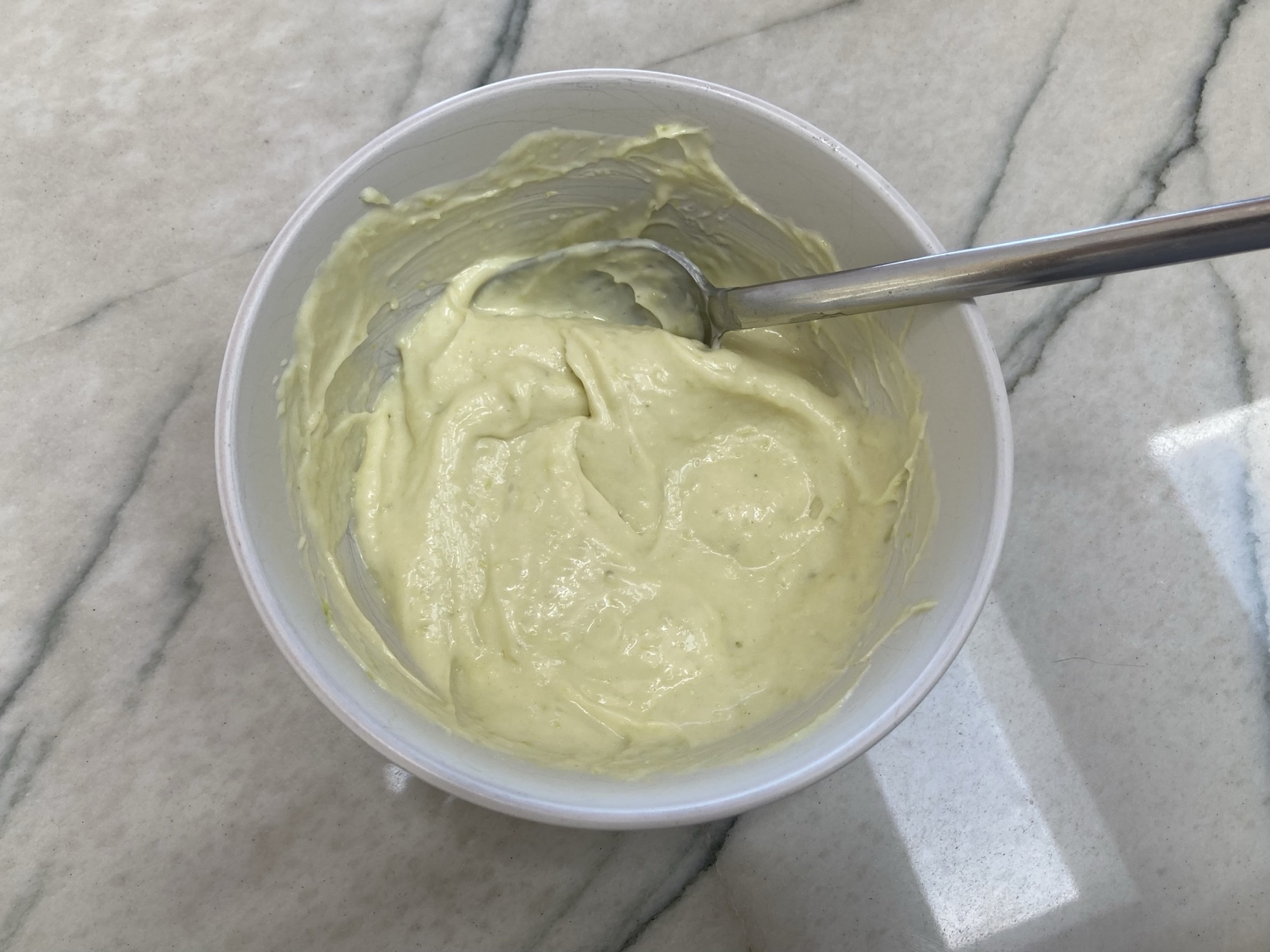
Preheat the oven to 350°F. Spread the mixture over the top of the salmon in an even layer.
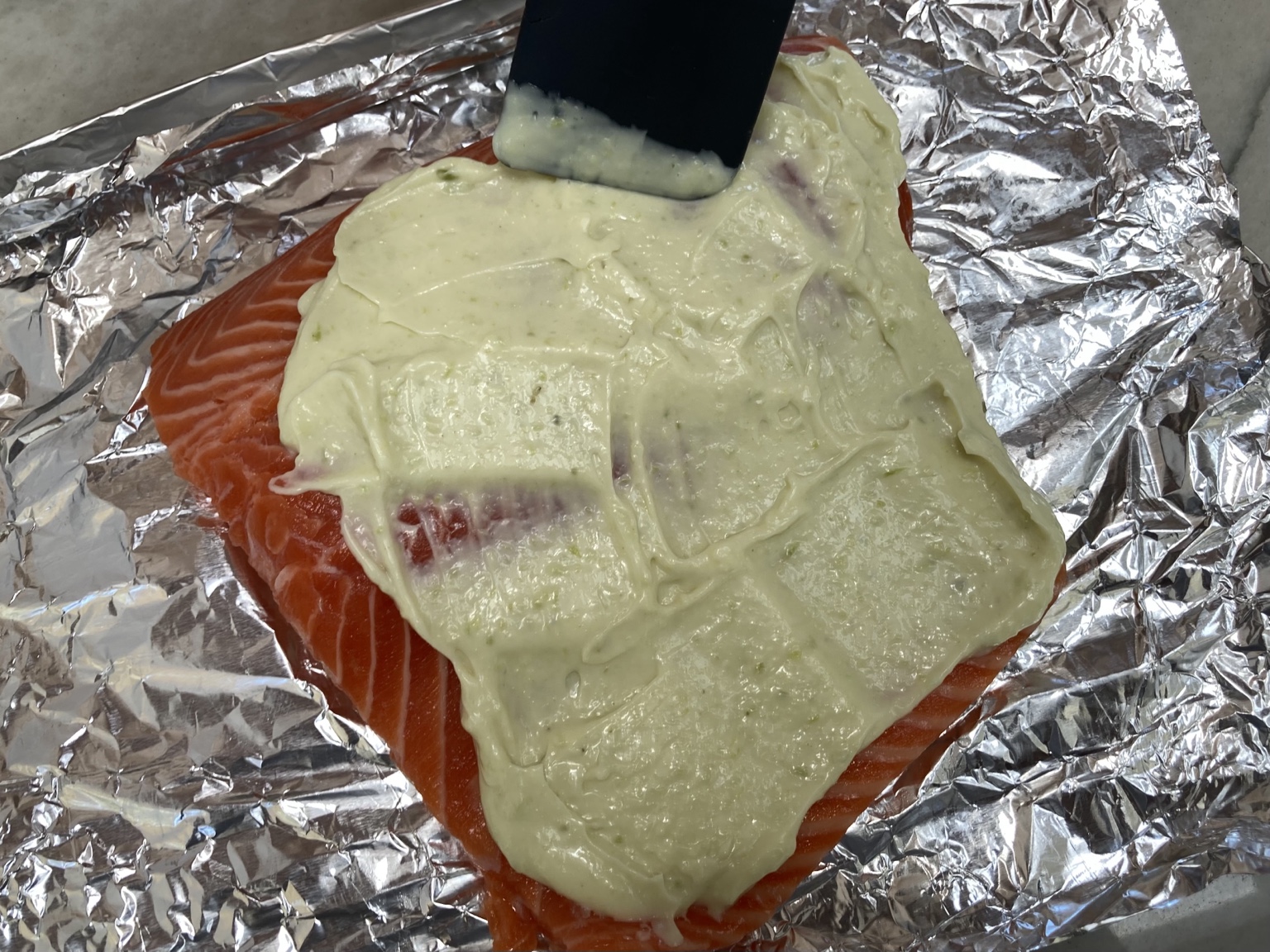
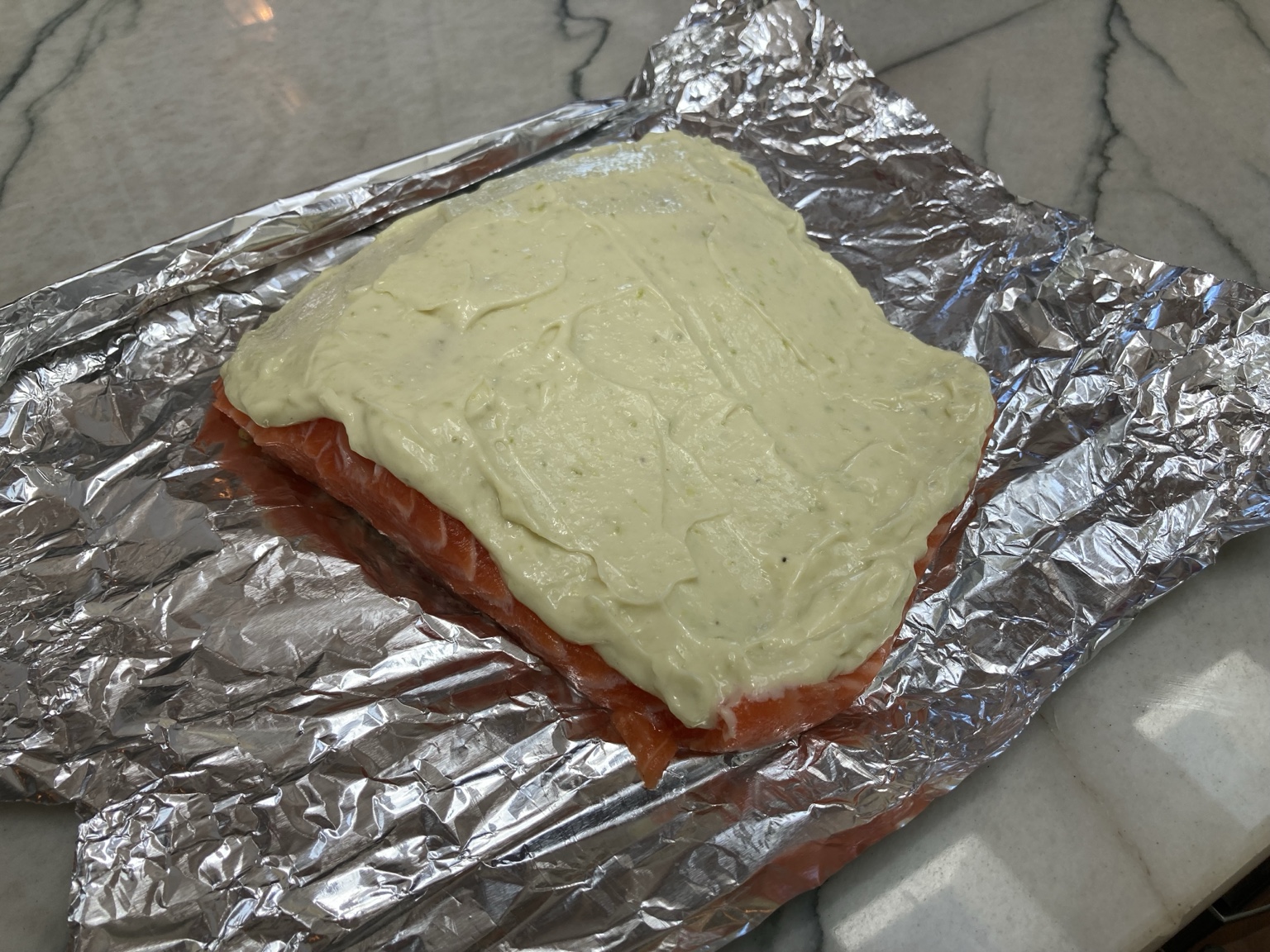
Bake at 350°F for 15 minutes. By then, the surface of the wasabi mayo should begin to set and look slightly dry. That’s when I switch to broil.
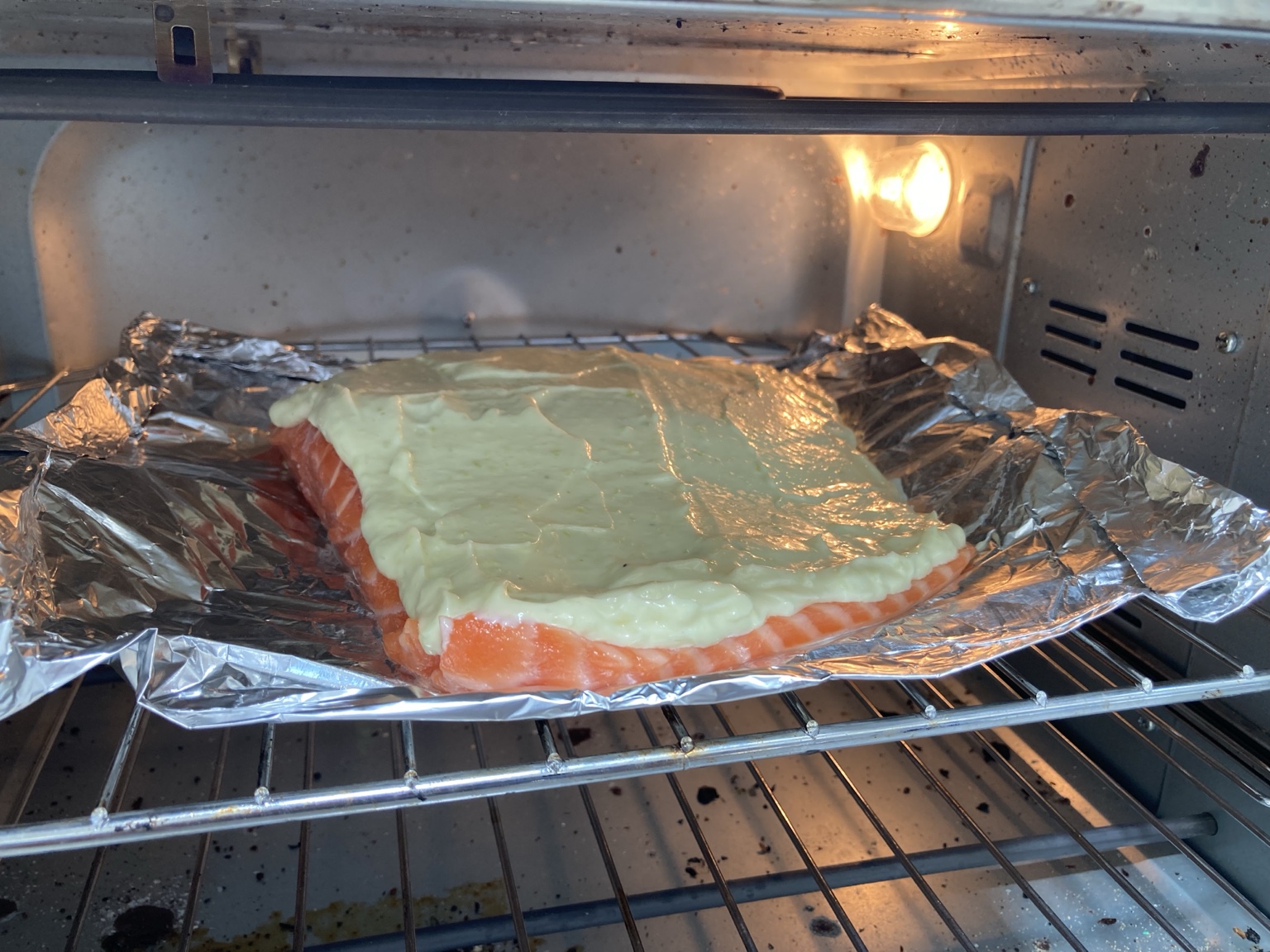
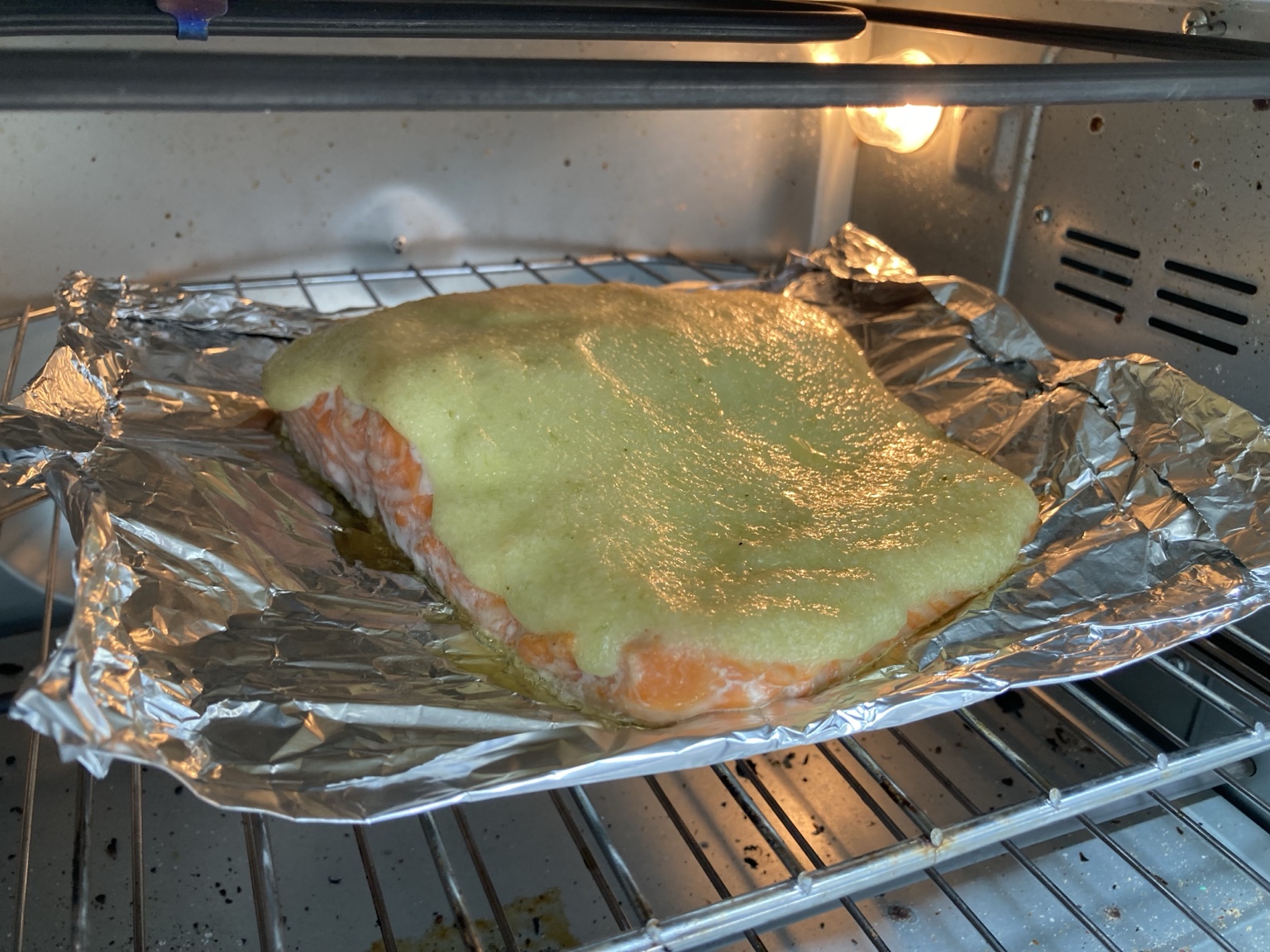
Broil at 450°F for 5 minutes. Halfway through, at 2 minutes 30 seconds, turn the foil or pan around so the opposite end faces the back of the oven. Broil for the remaining 2 minutes 30 seconds.
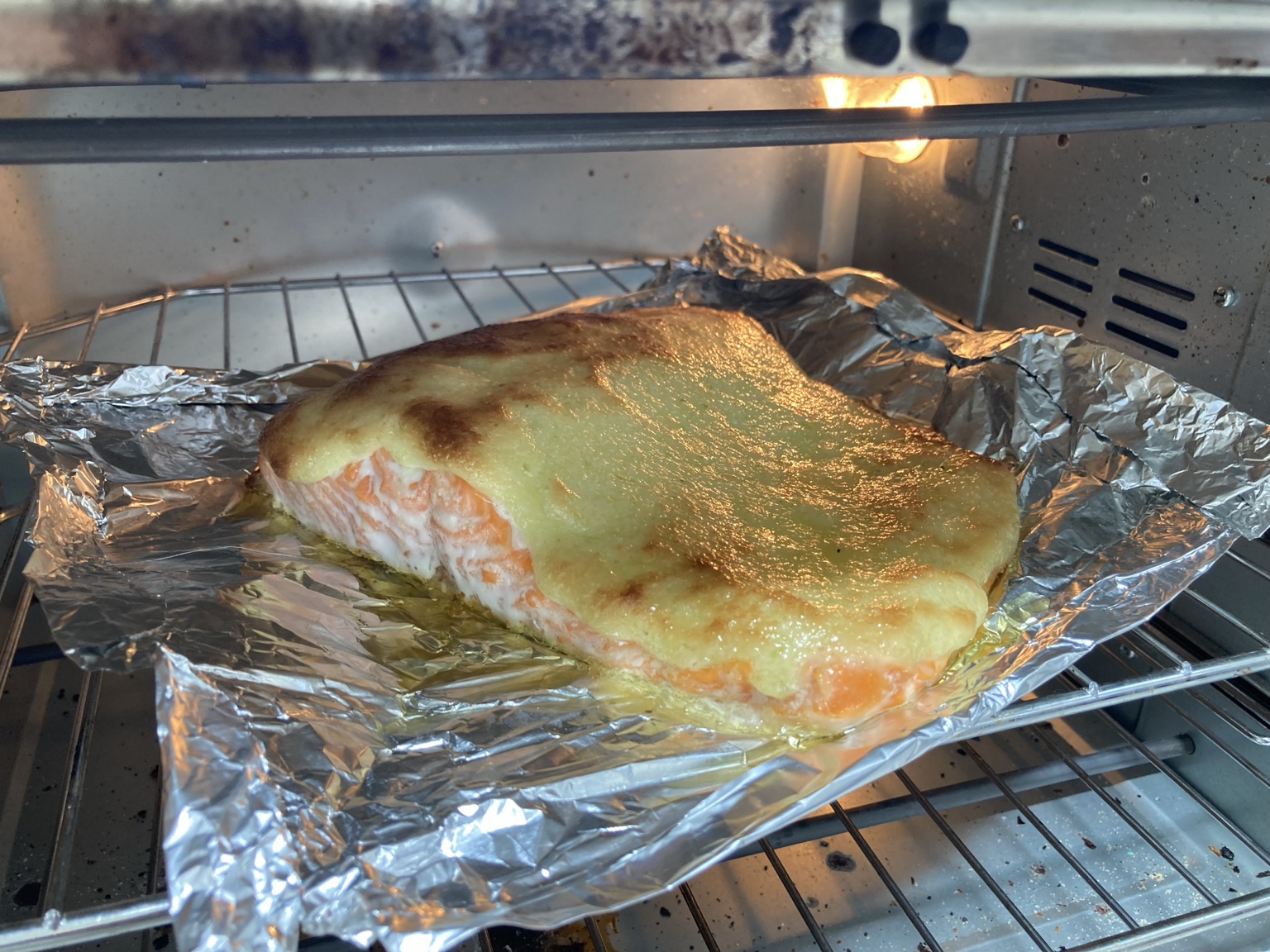
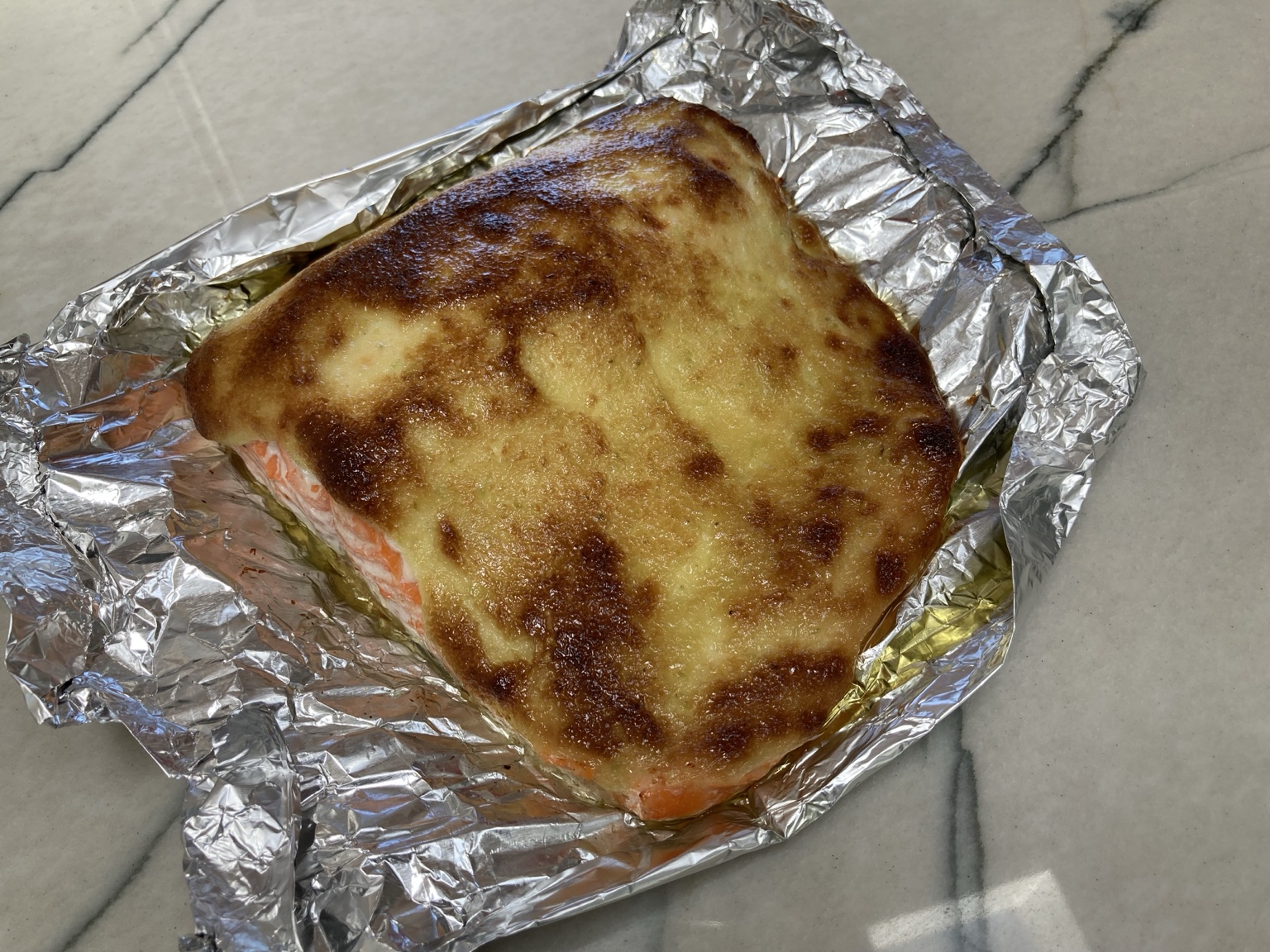
Remove the salmon from the oven after the full 5 minutes of broiling.
— Jacob, Blank Discovery
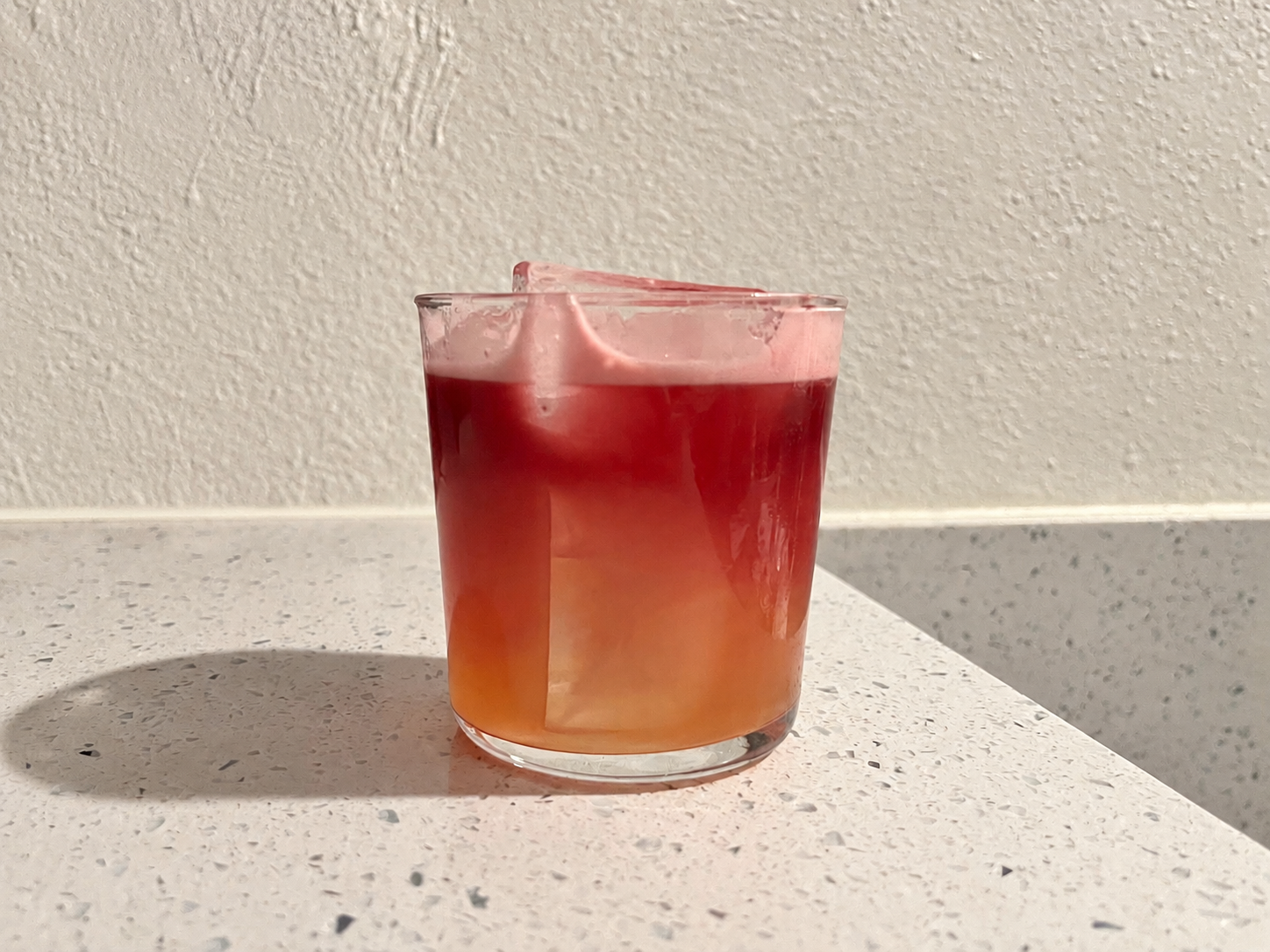
New York Sour
2 oz bourbon
¾ oz simple syrup
¾ oz fresh lemon juice
1 dash Angostura bitters
¾–1 oz dry red wine
Tiny pinch of salt
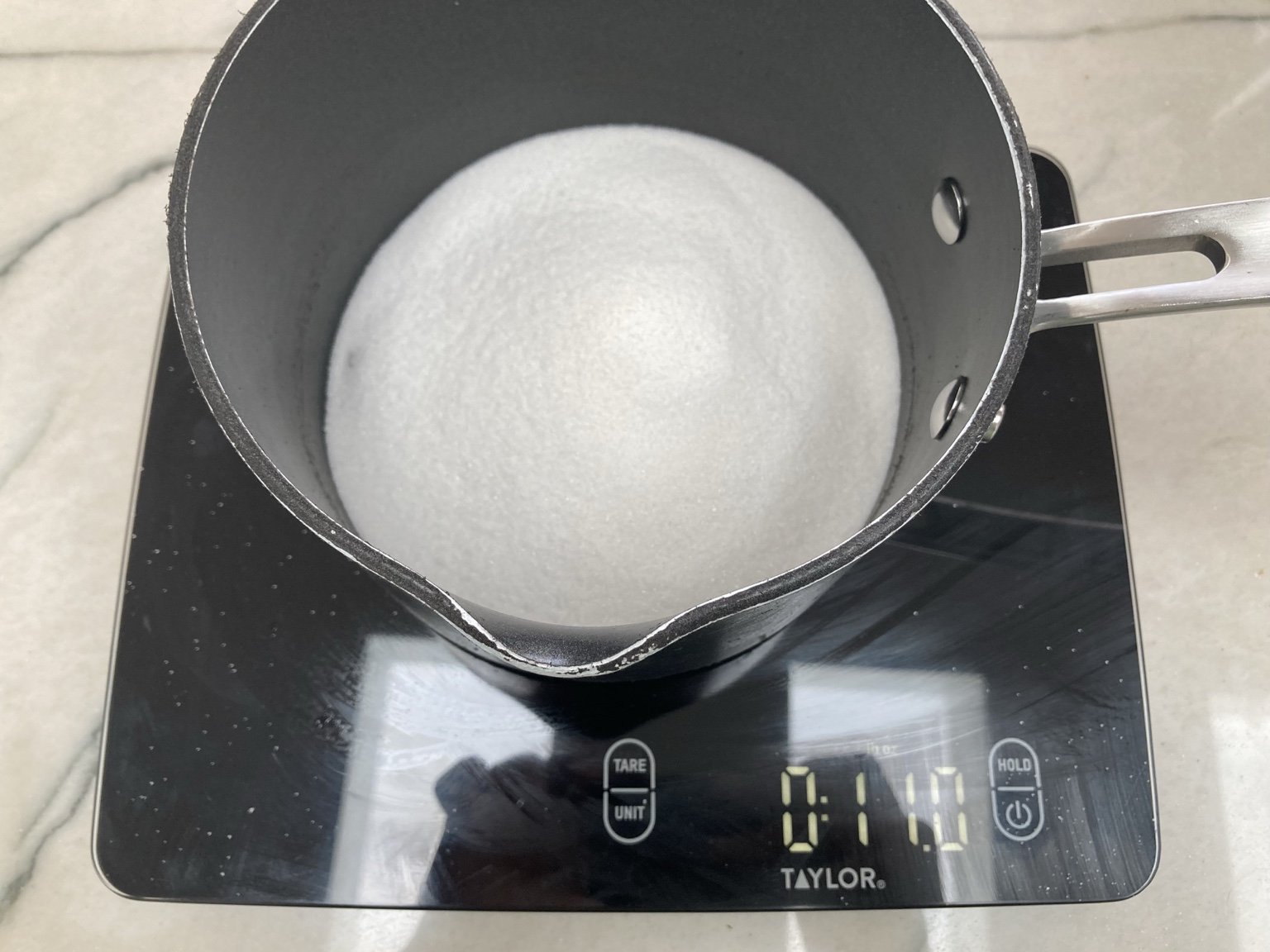
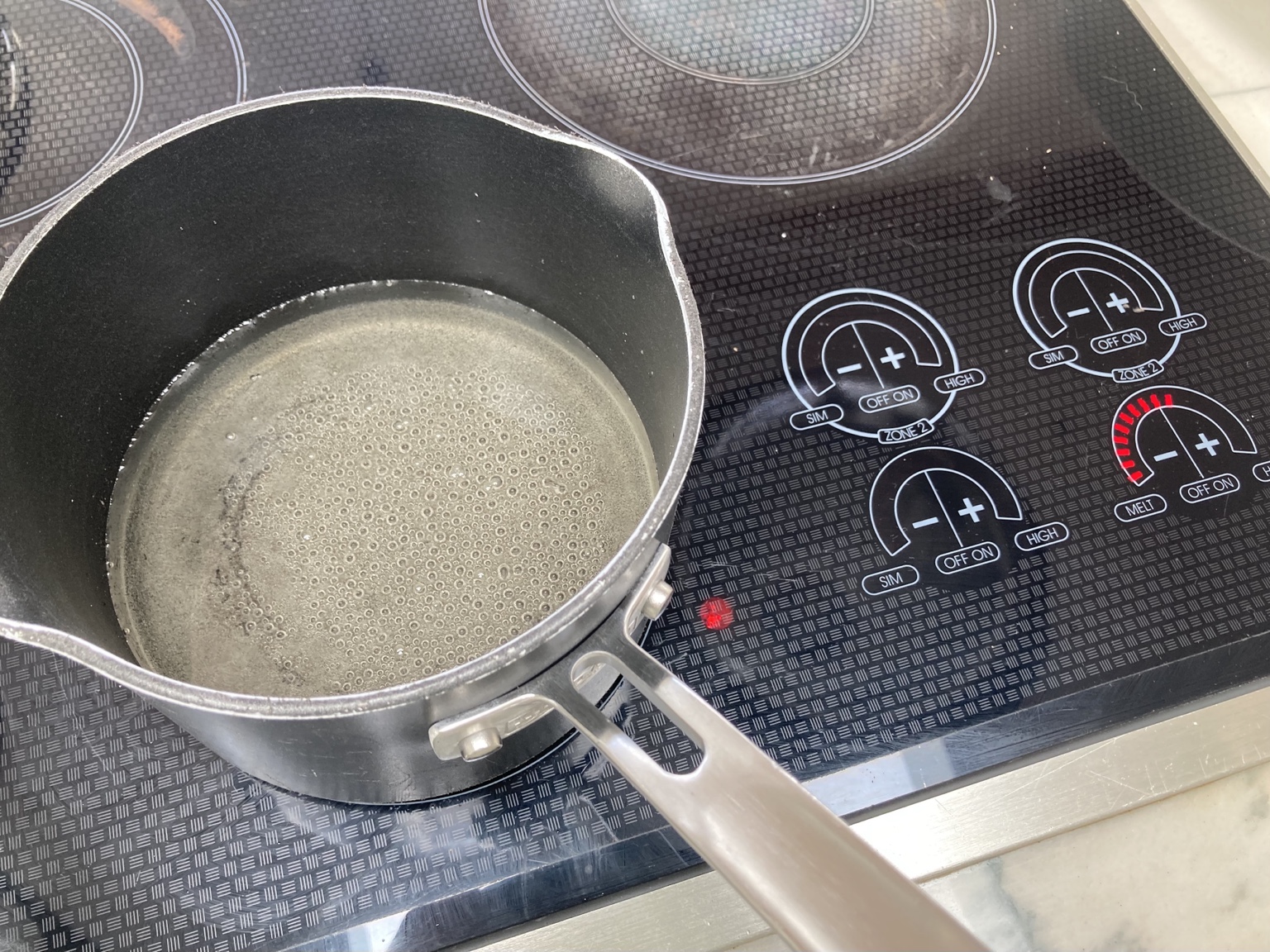
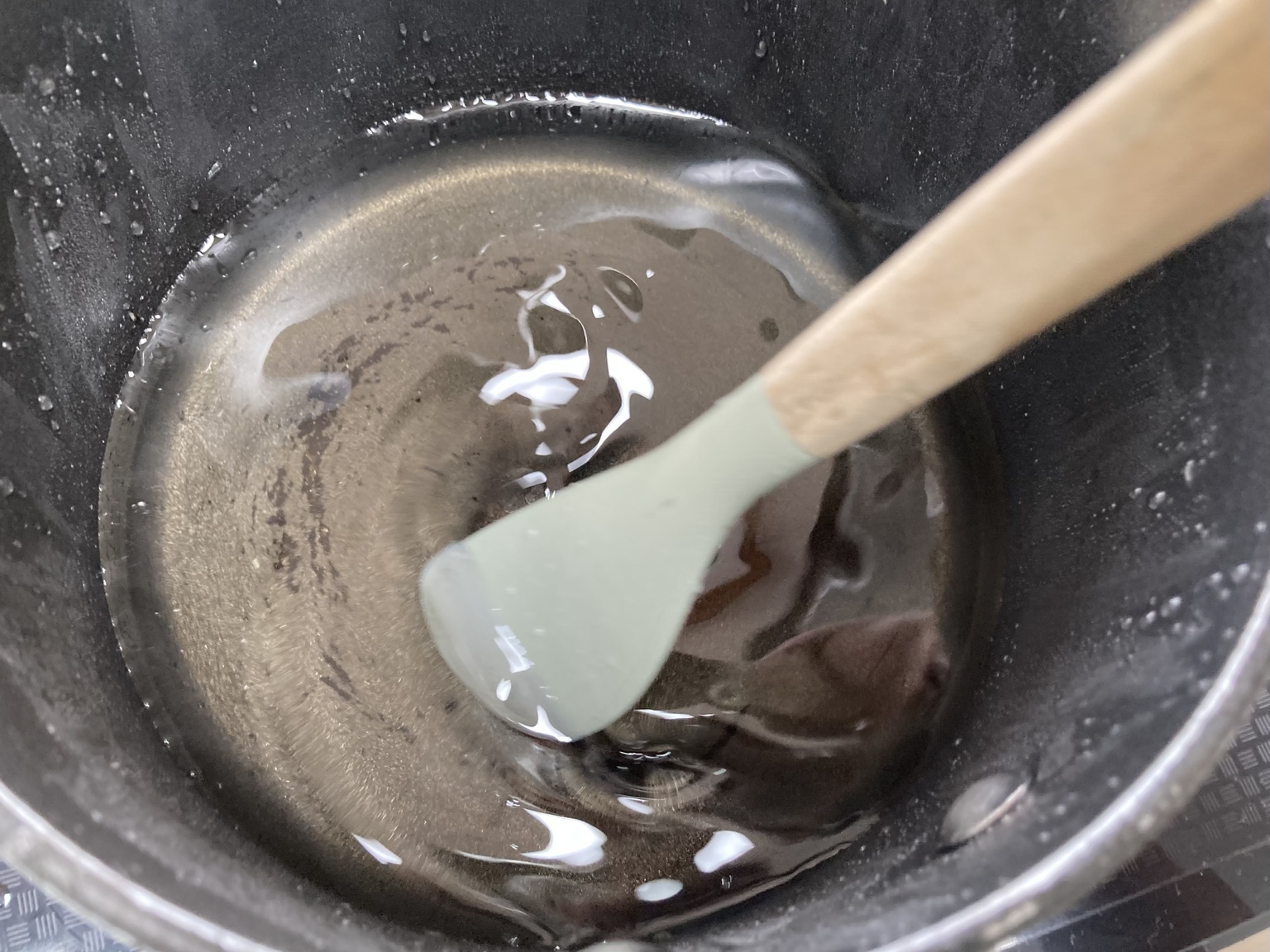
Start with the simple syrup. Weigh equal parts white sugar and water. I like to bring it to a boil, then turn the heat to low. Stir gently and cook until just after the liquid no longer splashes when given a gentle push with a spatula. Let it cool before making the drink.
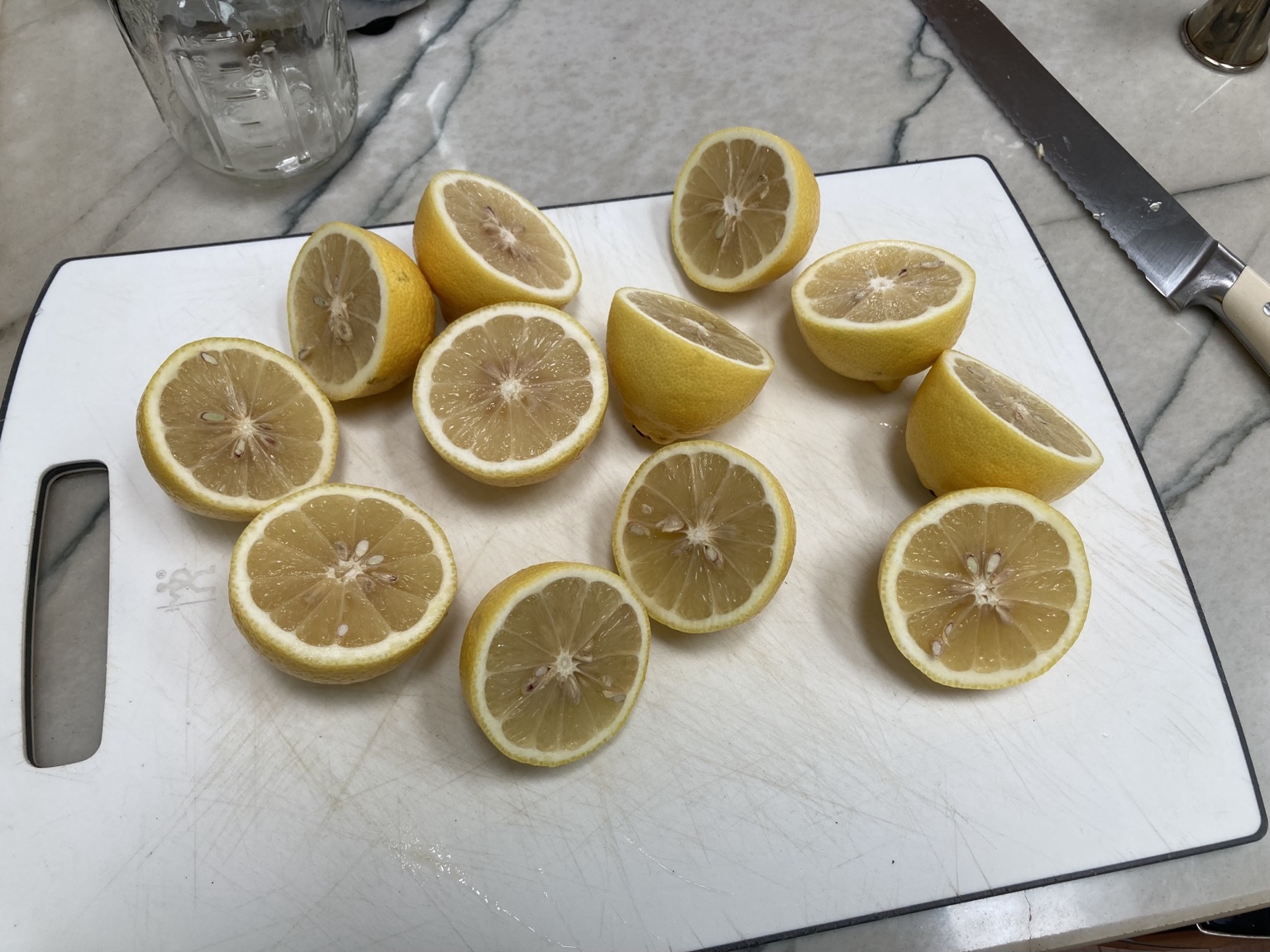
Cut the lemons in half and juice them. Strain just to remove the seeds. A little pulp is fine.
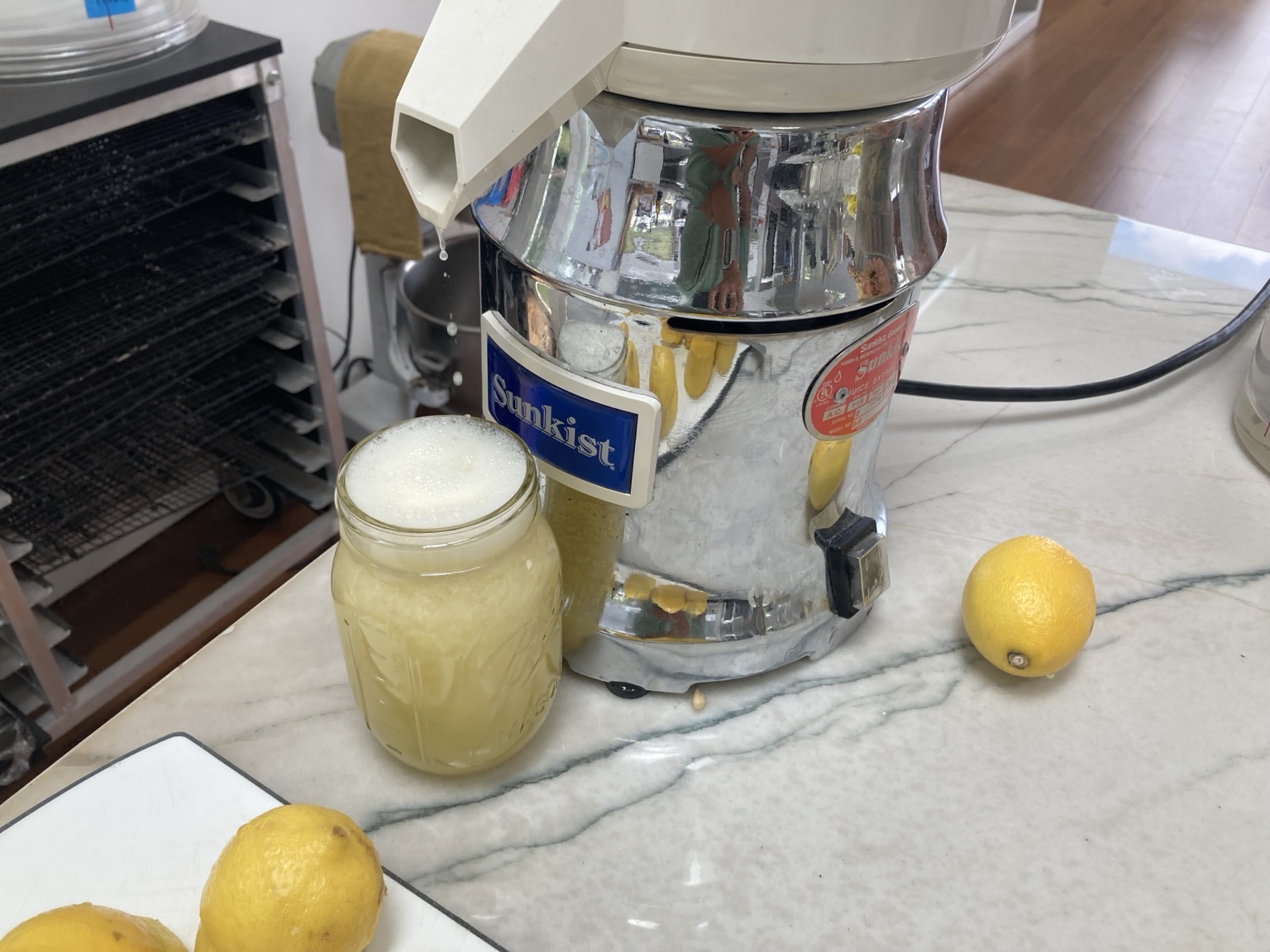
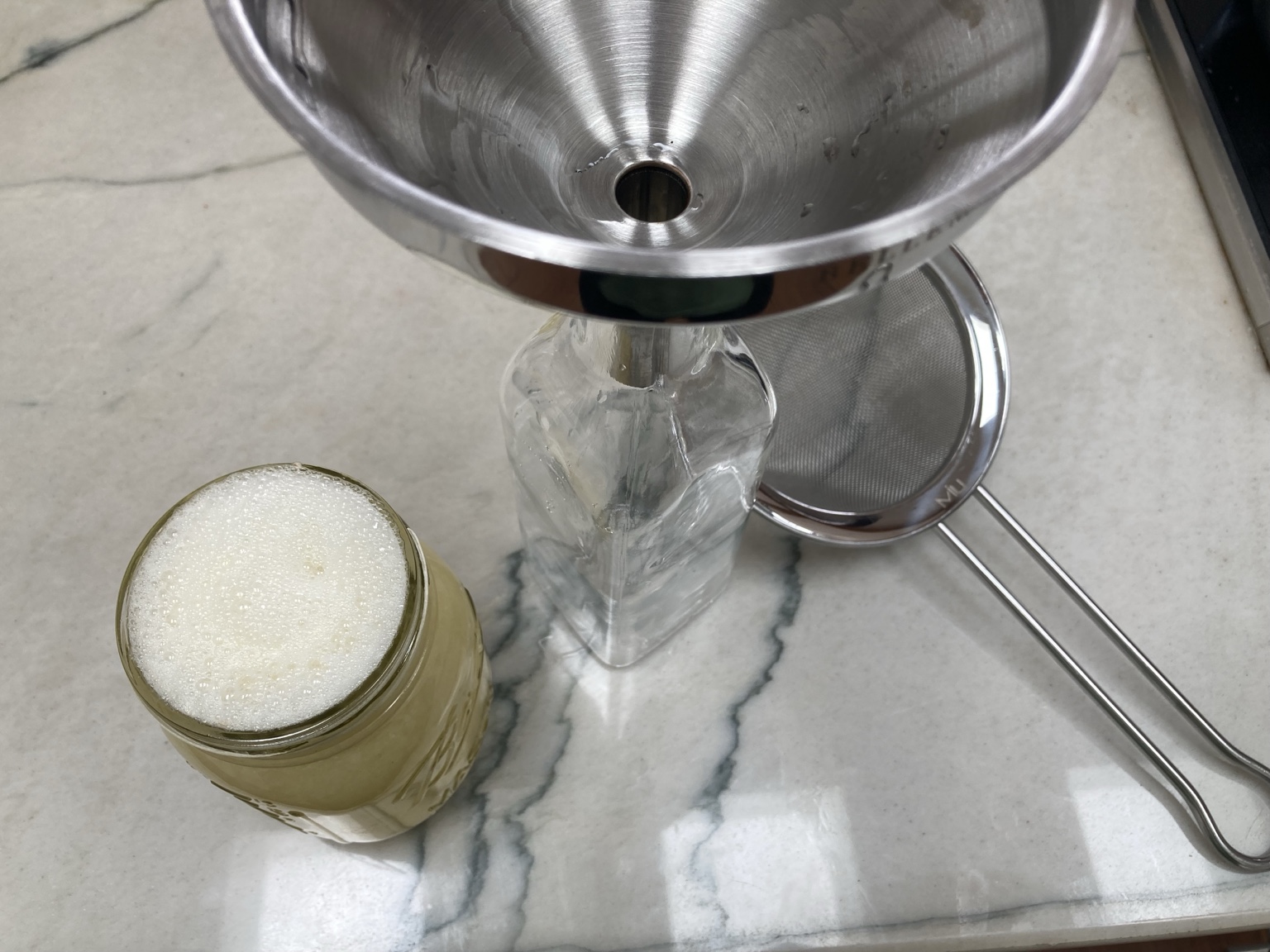
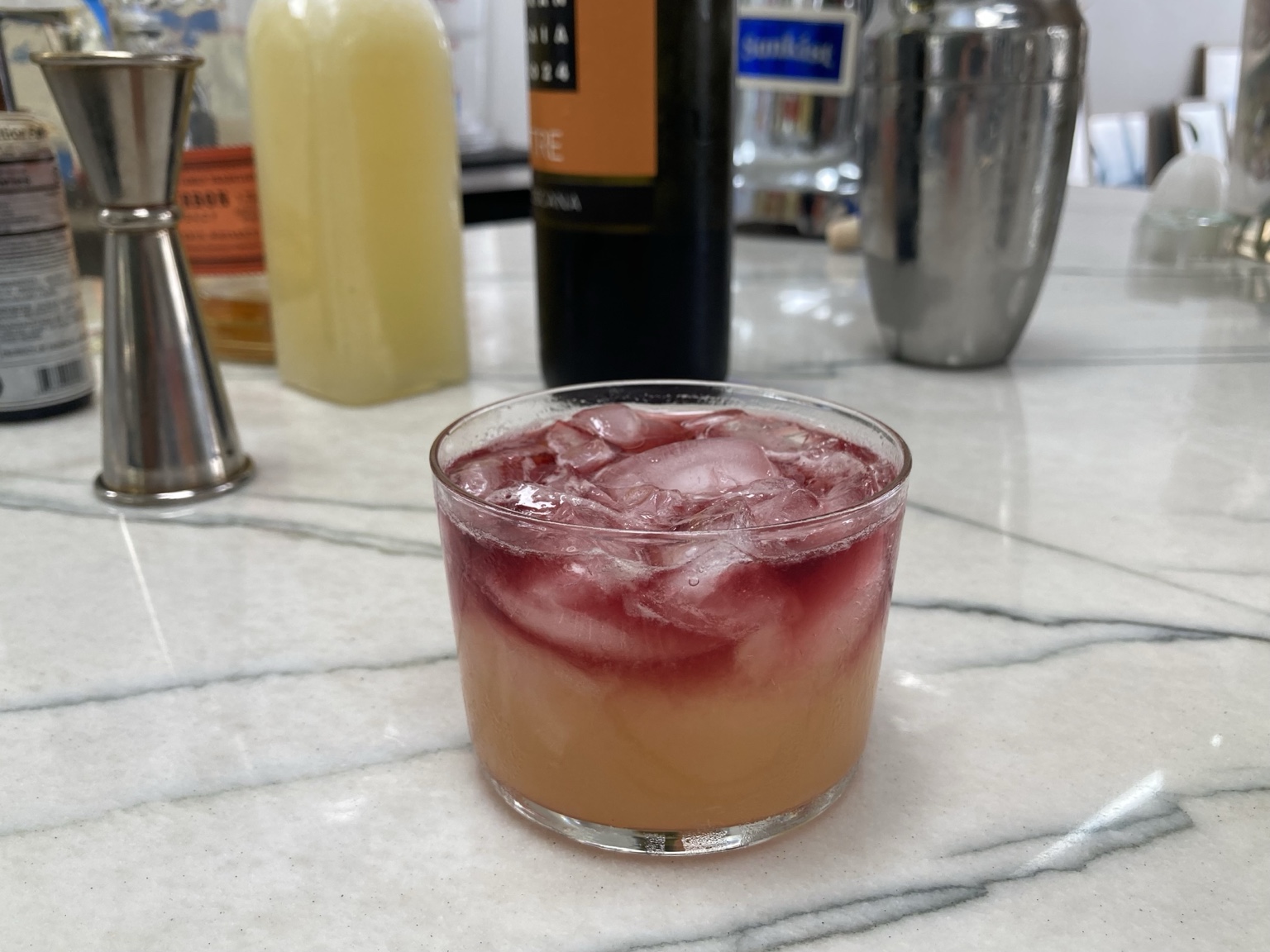
For this recipe, it’s important to finish with a dry red wine, ideally a big Napa Cabernet. This variation leans on the float more as a filter that adds complexity than anything else.
Super Tuscans work as a way to lighten the cocktail’s punch while maintaining a dry finish for a daytime version.
Bourbon for more punch. Rye for a more dynamic base.
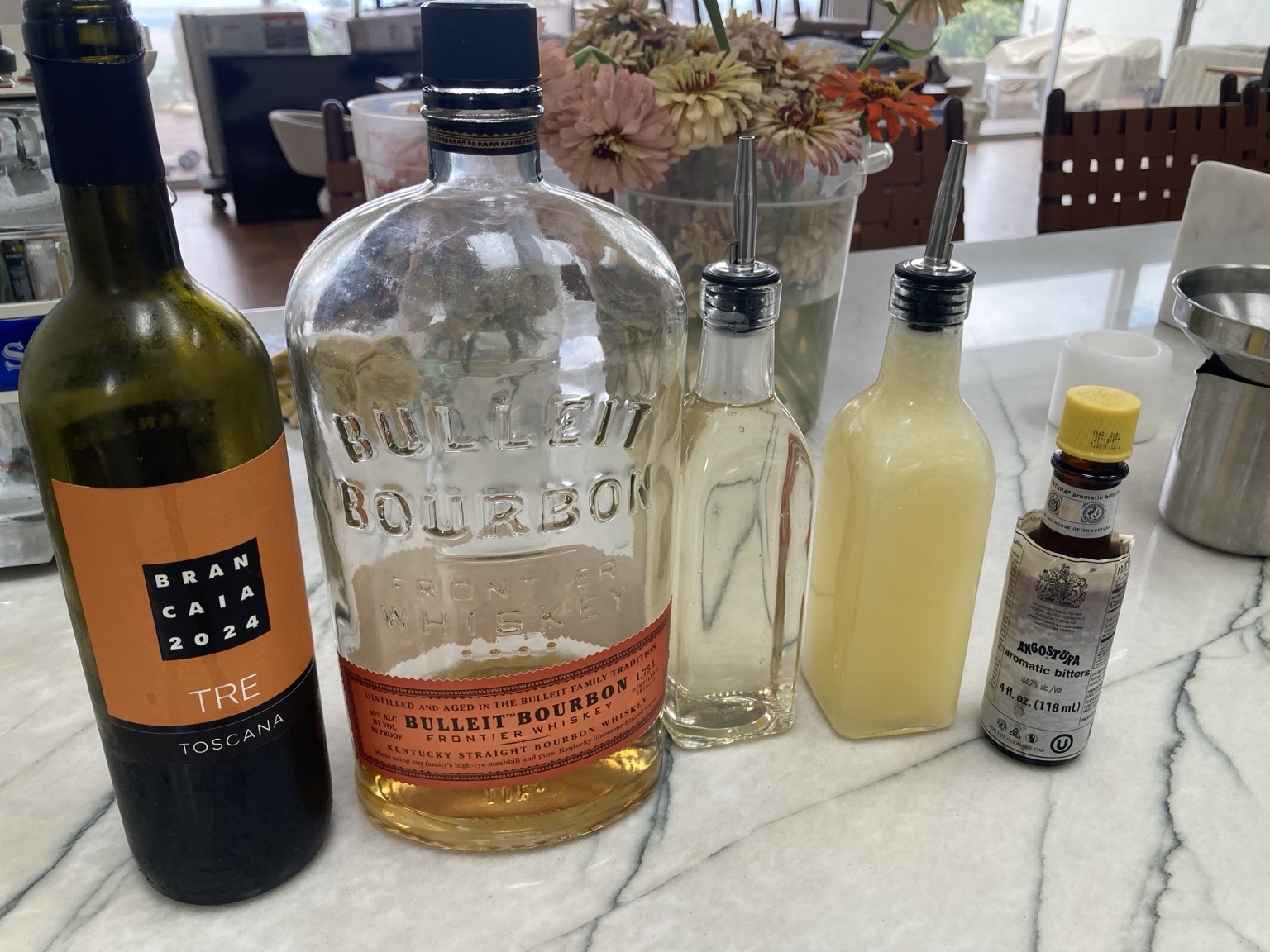
Add a tiny pinch of salt to the shaker first, then ¾ oz simple syrup and ¾ oz fresh lemon juice.
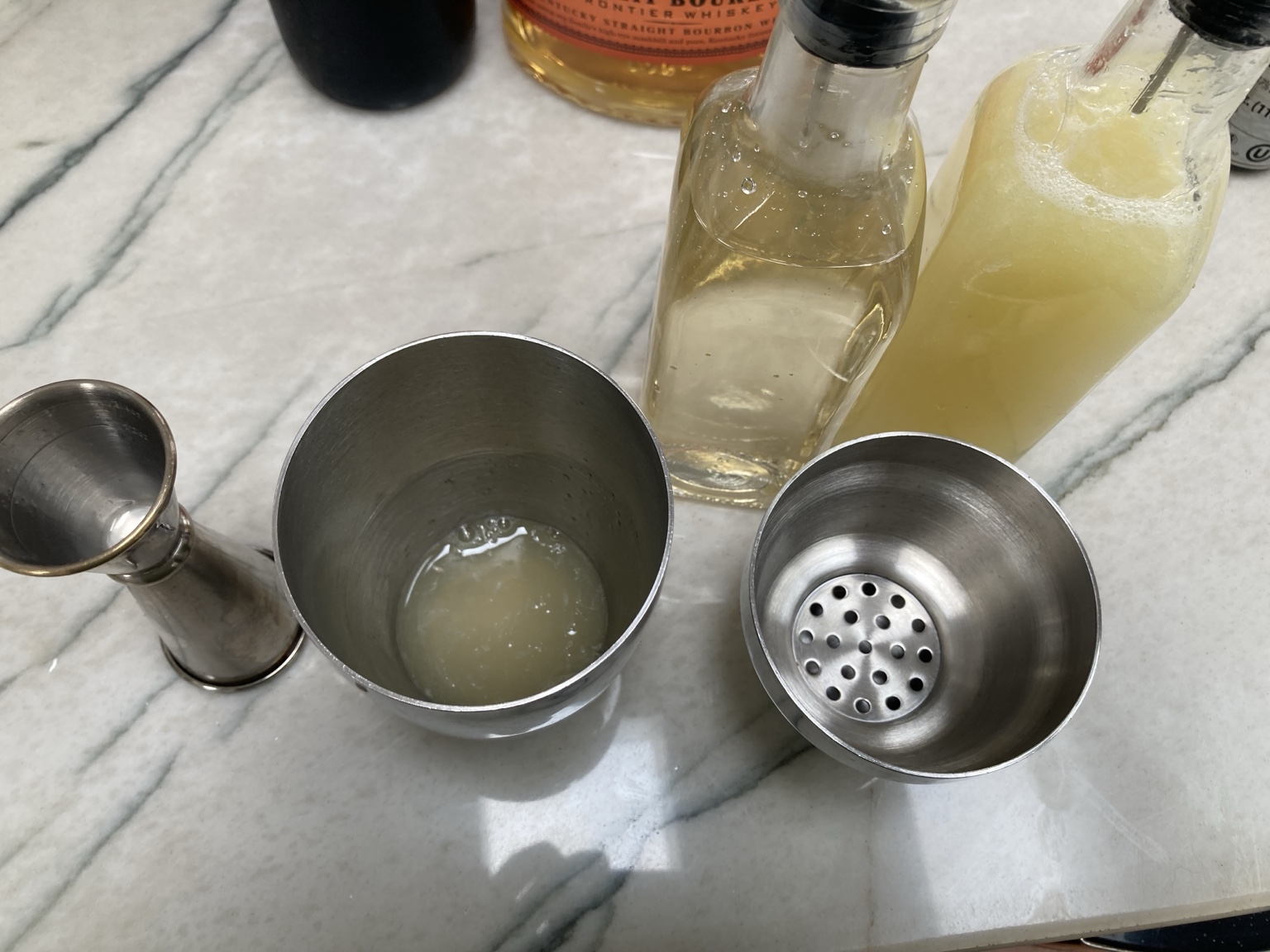
Add 1 dash of Angostura bitters, followed by 2 oz bourbon.
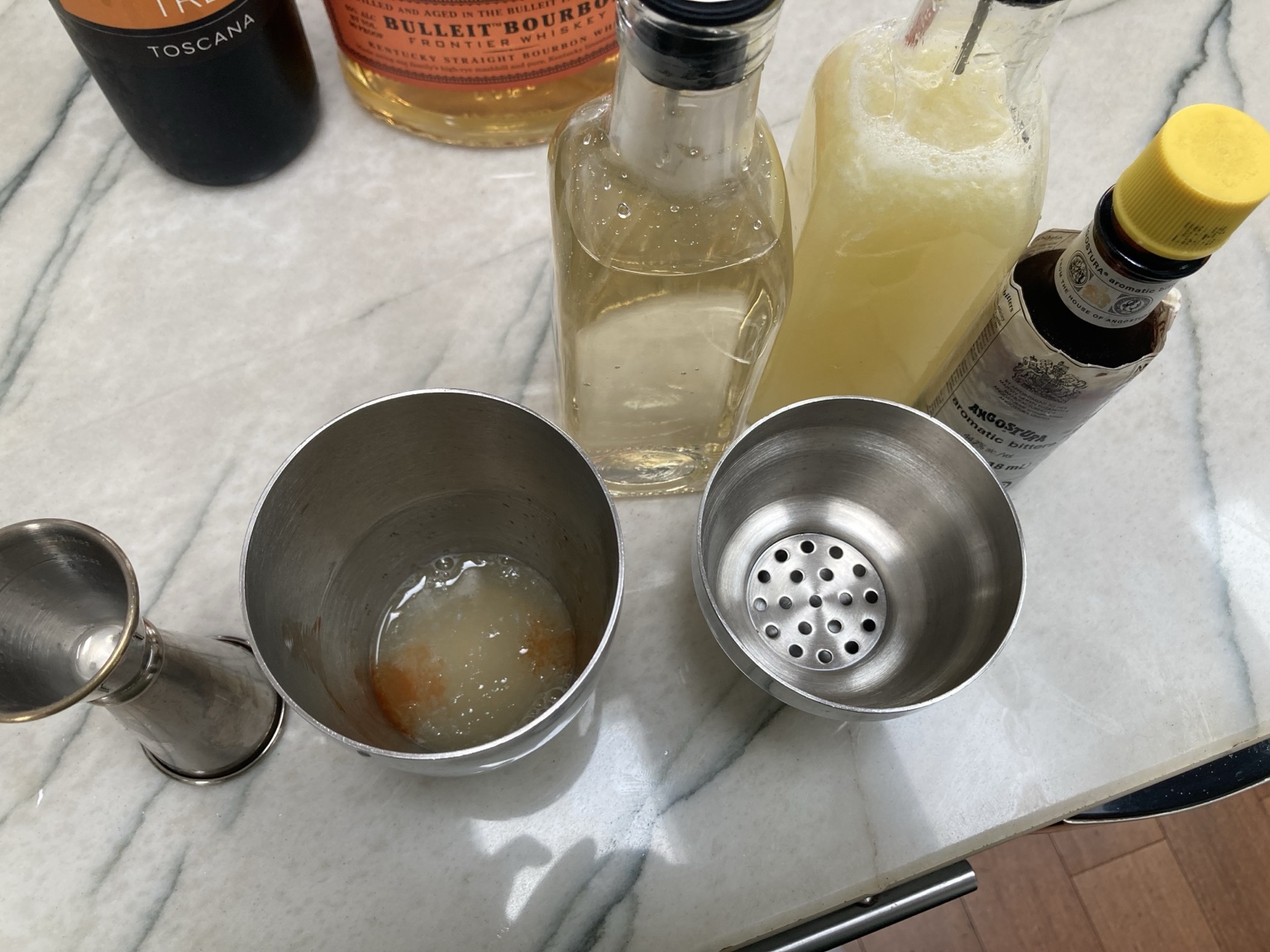
Fill the shaker with ice and shake until cold, making sure the ingredients are fully combined. The sugar in the sour makes it denser than the dry wine, which allows the wine to float. Shaking brings the ingredients together evenly.
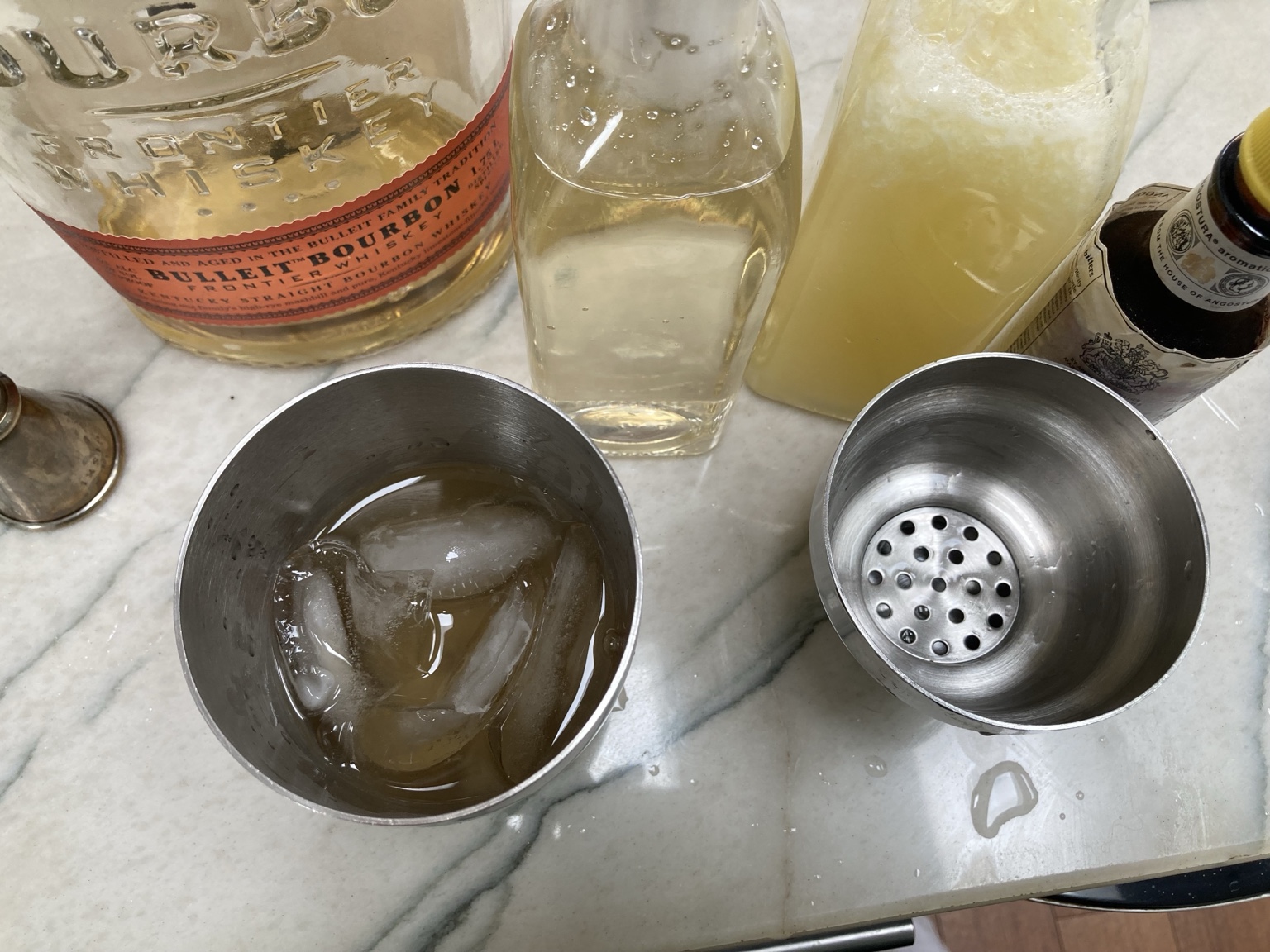
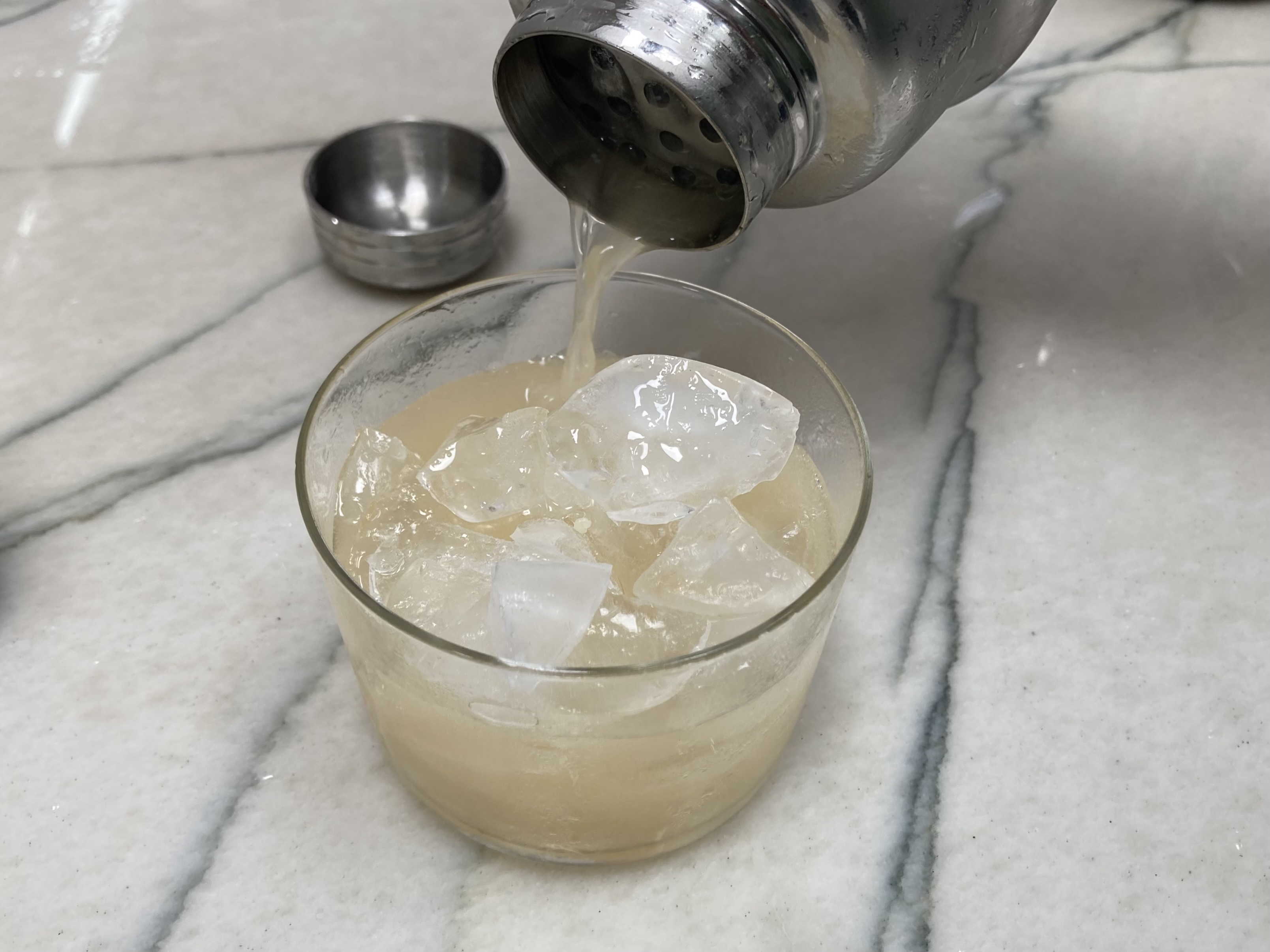
Strain into a rocks glass over fresh ice. A big rock is great, but not completely necessary.
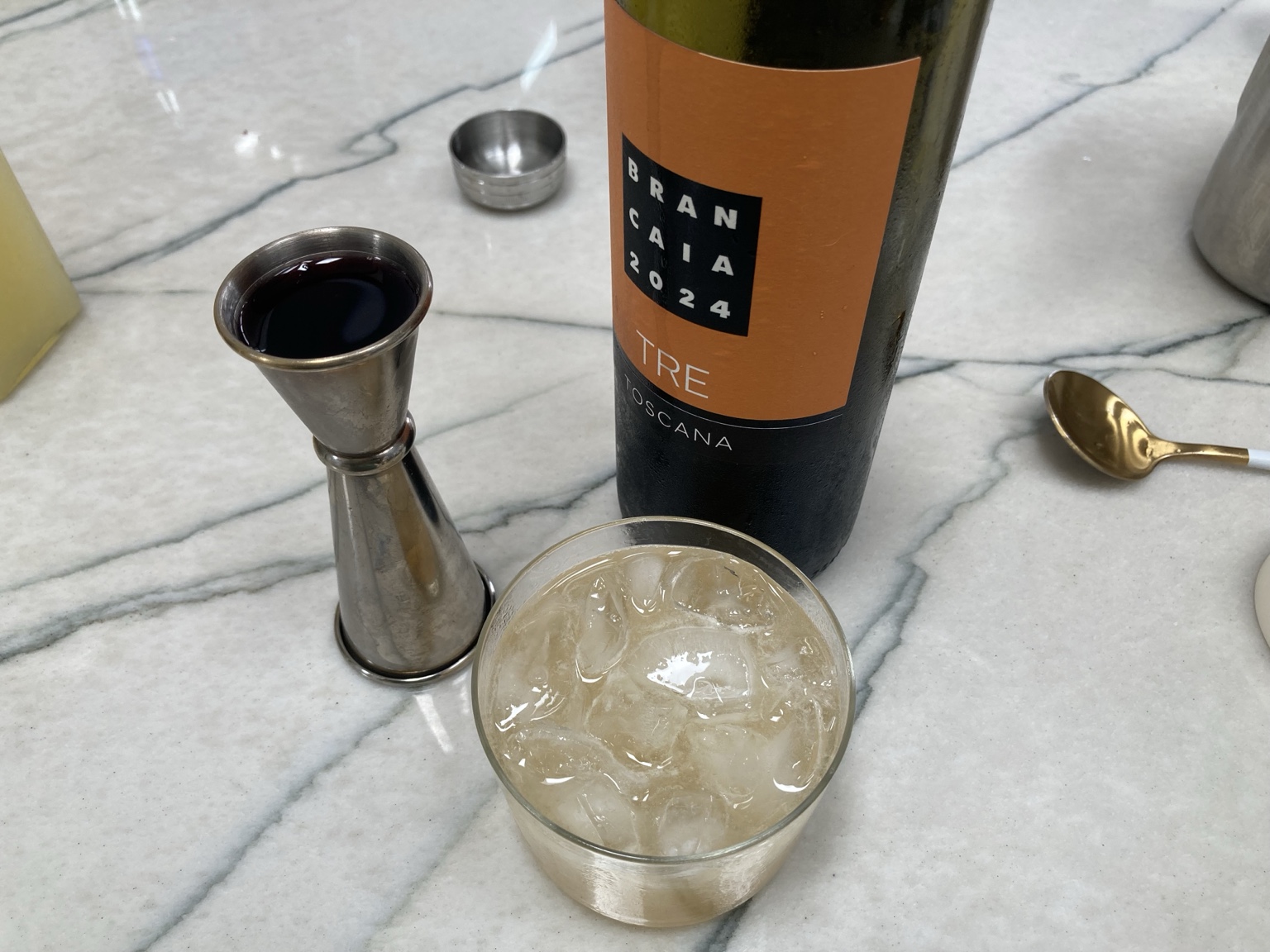
Measure ¾–1 oz dry red wine into a jigger. The important part is to pour slowly, as close to the surface of the drink as possible, so the wine rests on top.
Use a jigger rather than pouring straight from the bottle. I’ve found this helps control the wine pour without adding too many steps.
— Jacob, Blank Discovery
white ferrari
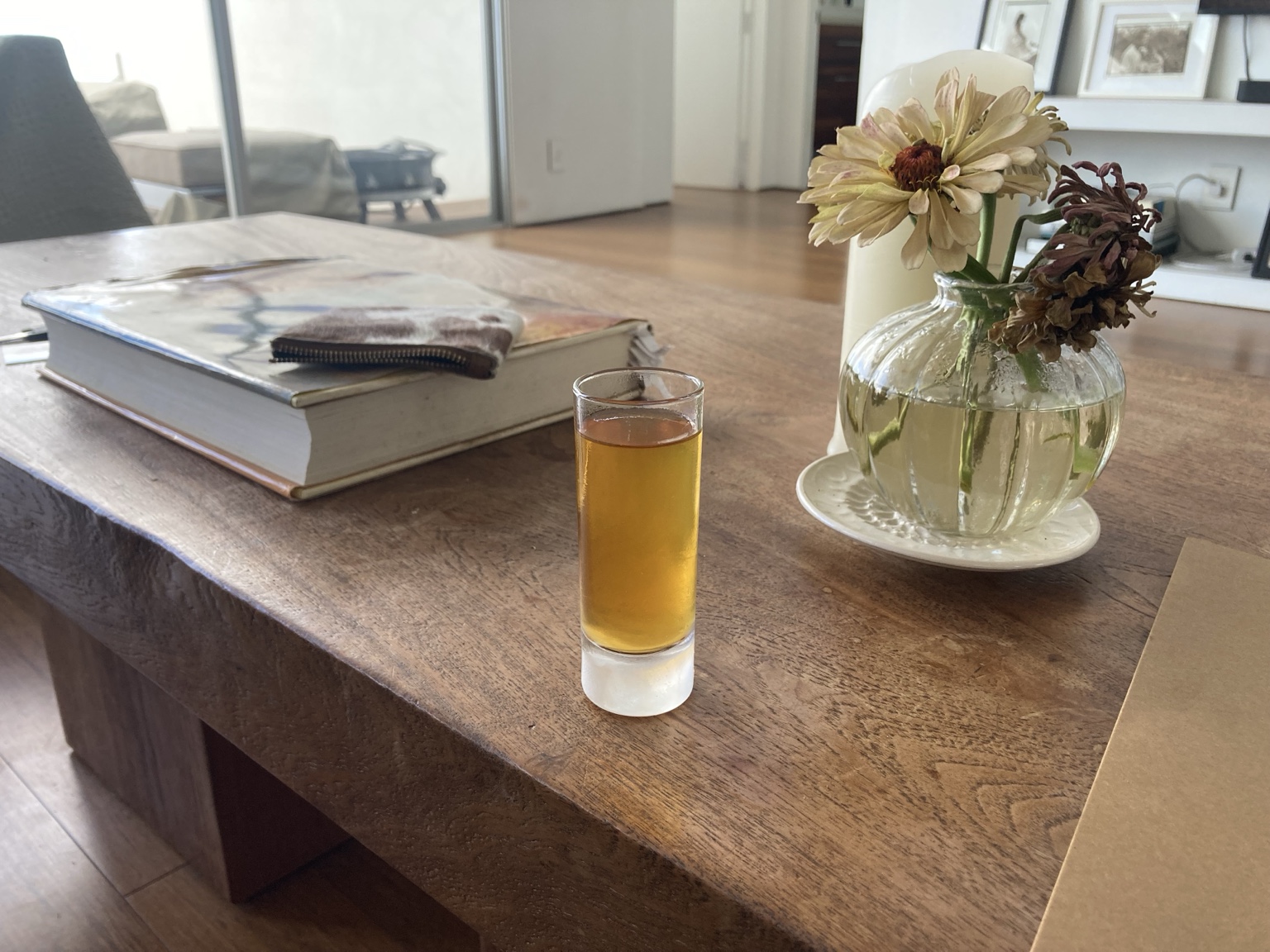
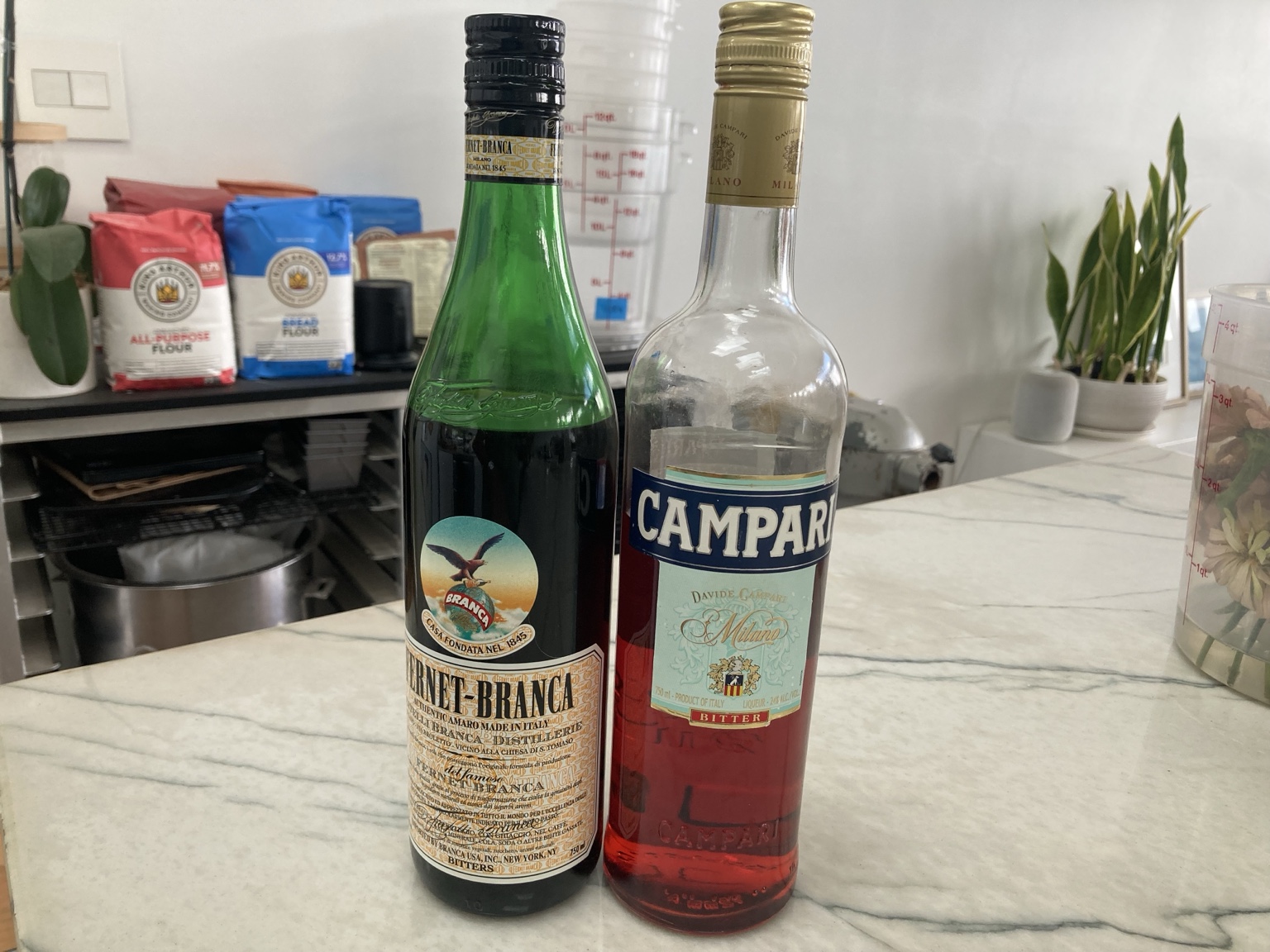
Equal parts Fernet-Branca and Campari make a Ferrari
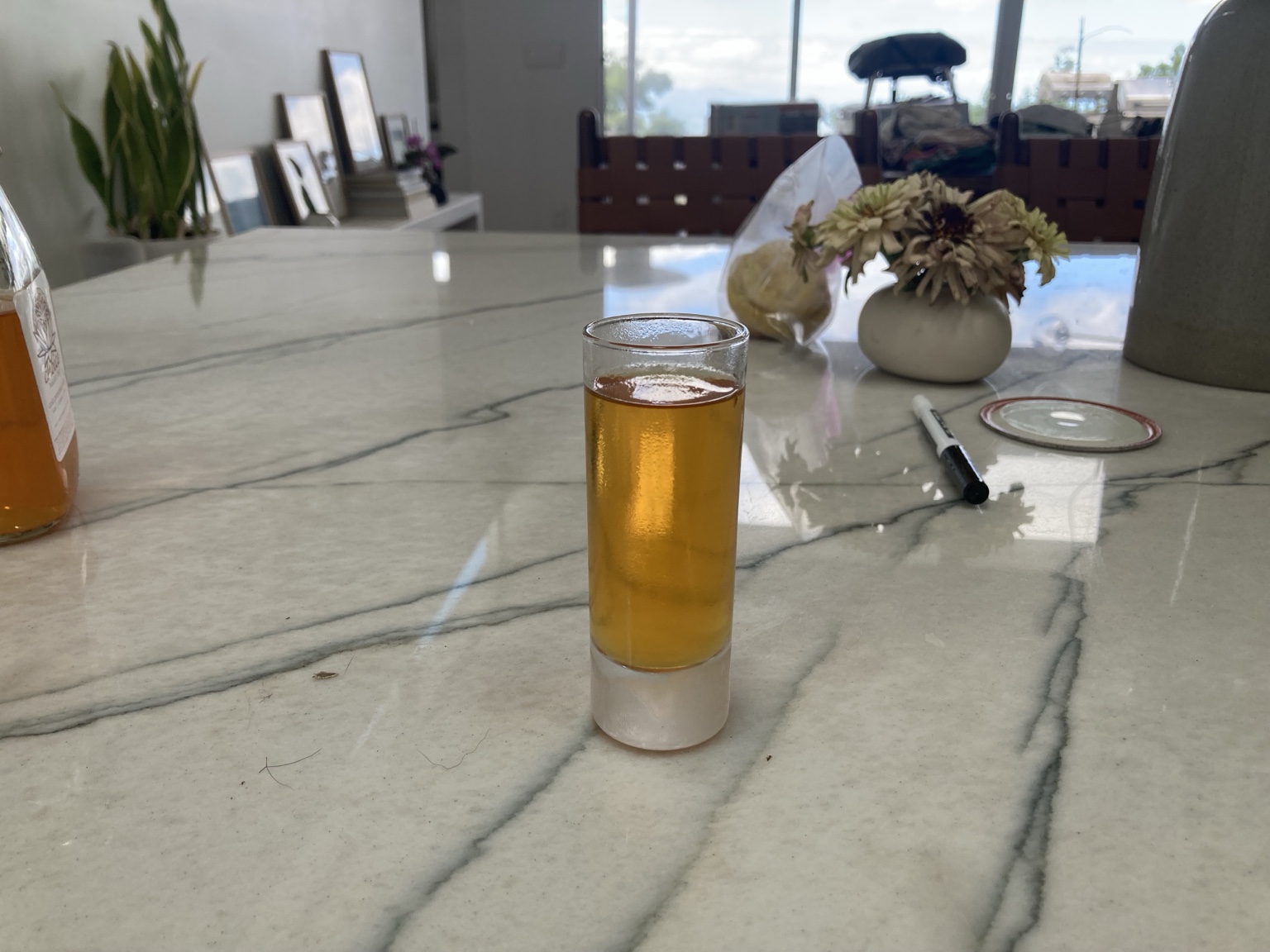
This is a milk-clarified version
Before clarification, the Fernet and Campari make a dark reddish-brown mixture
The change to a pale, translucent pour is what makes the process so interesting
6 oz Fernet-Branca
6 oz Campari
1/2 oz water
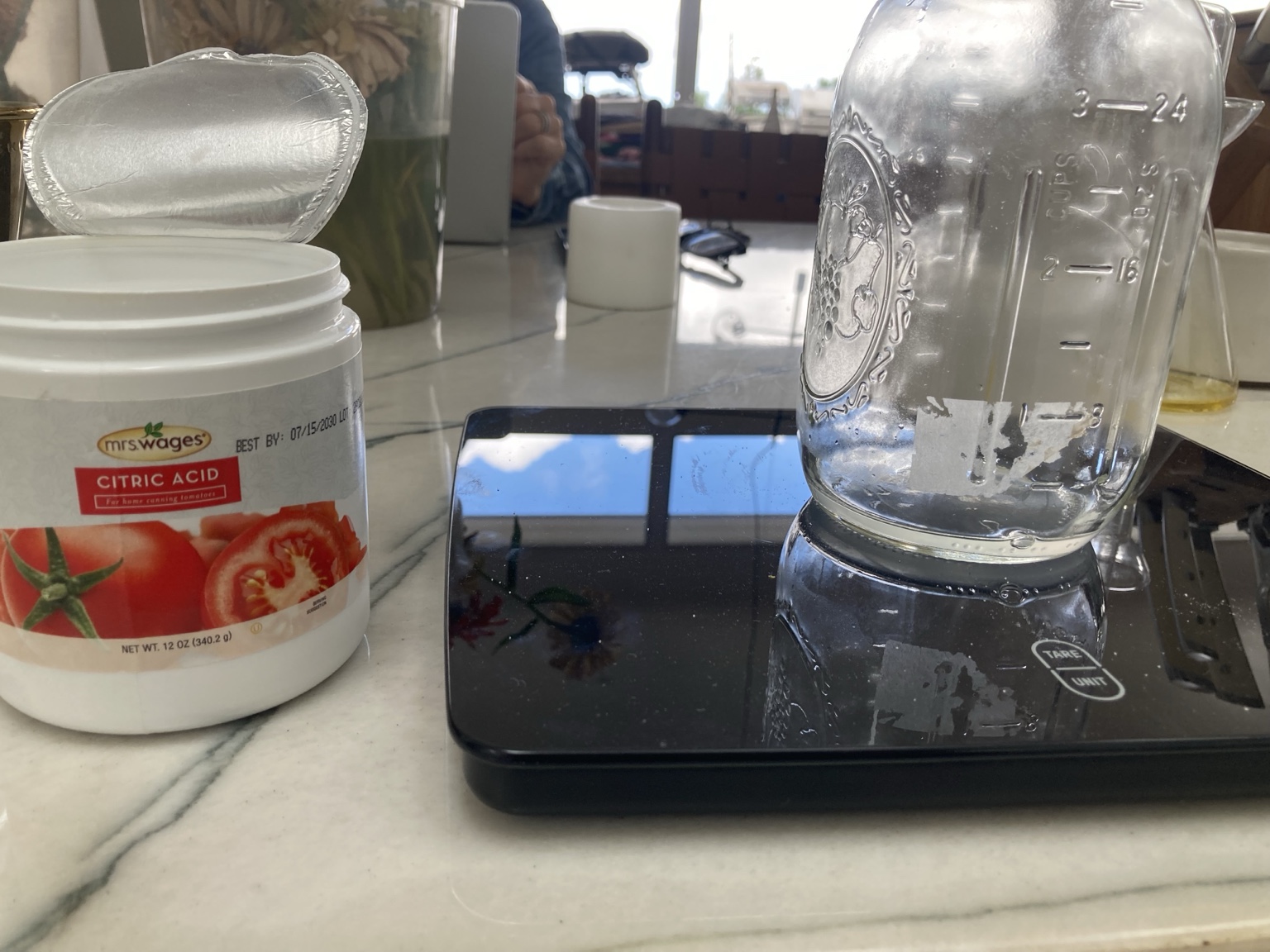
1.5 g food-grade citric acid
3 oz whole milk
Dissolve the citric acid in the water
If you warm the water to dissolve the acid, let it cool before adding the alcohol
Add the Campari
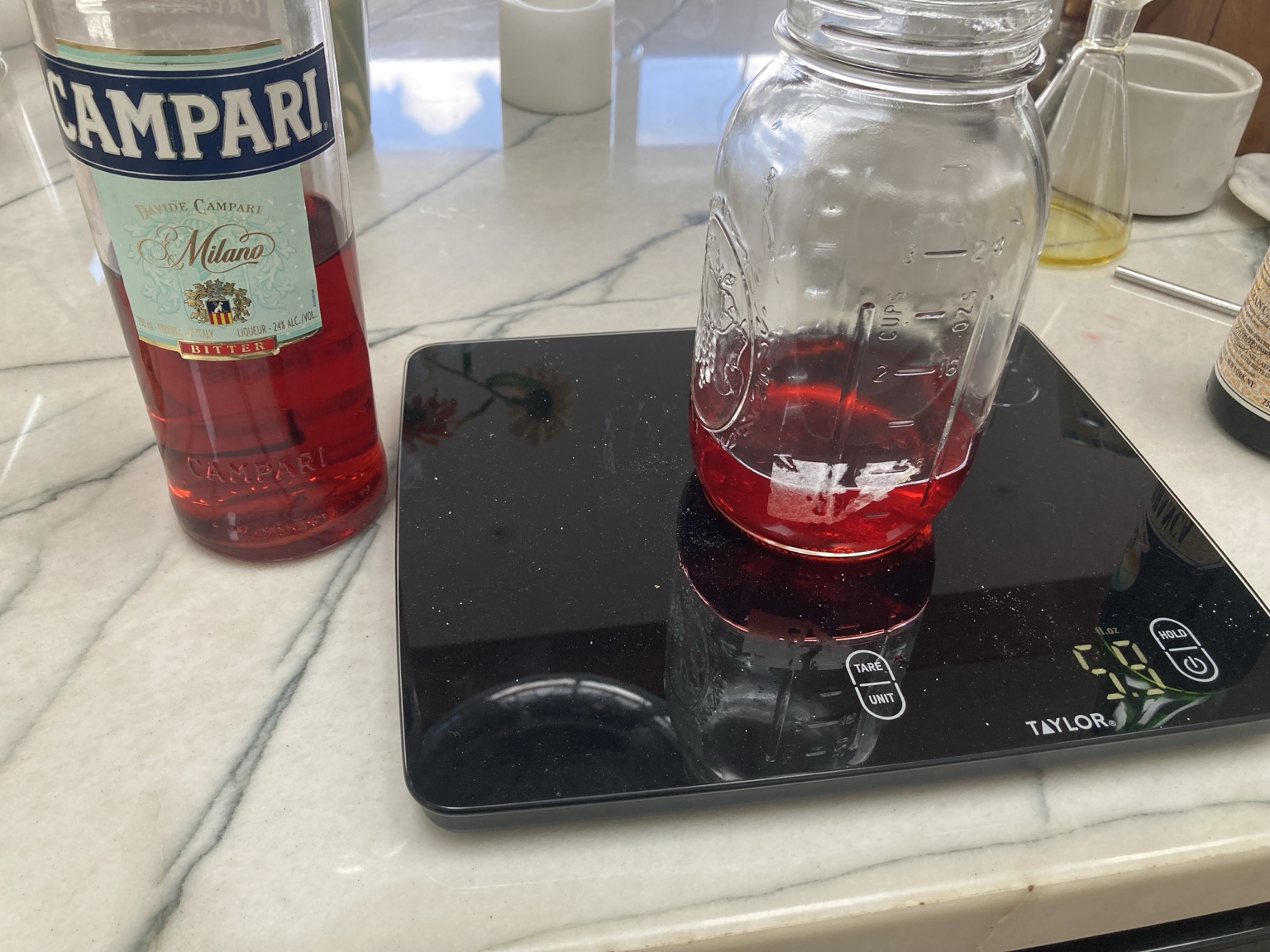
Add the Fernet and stir to combine
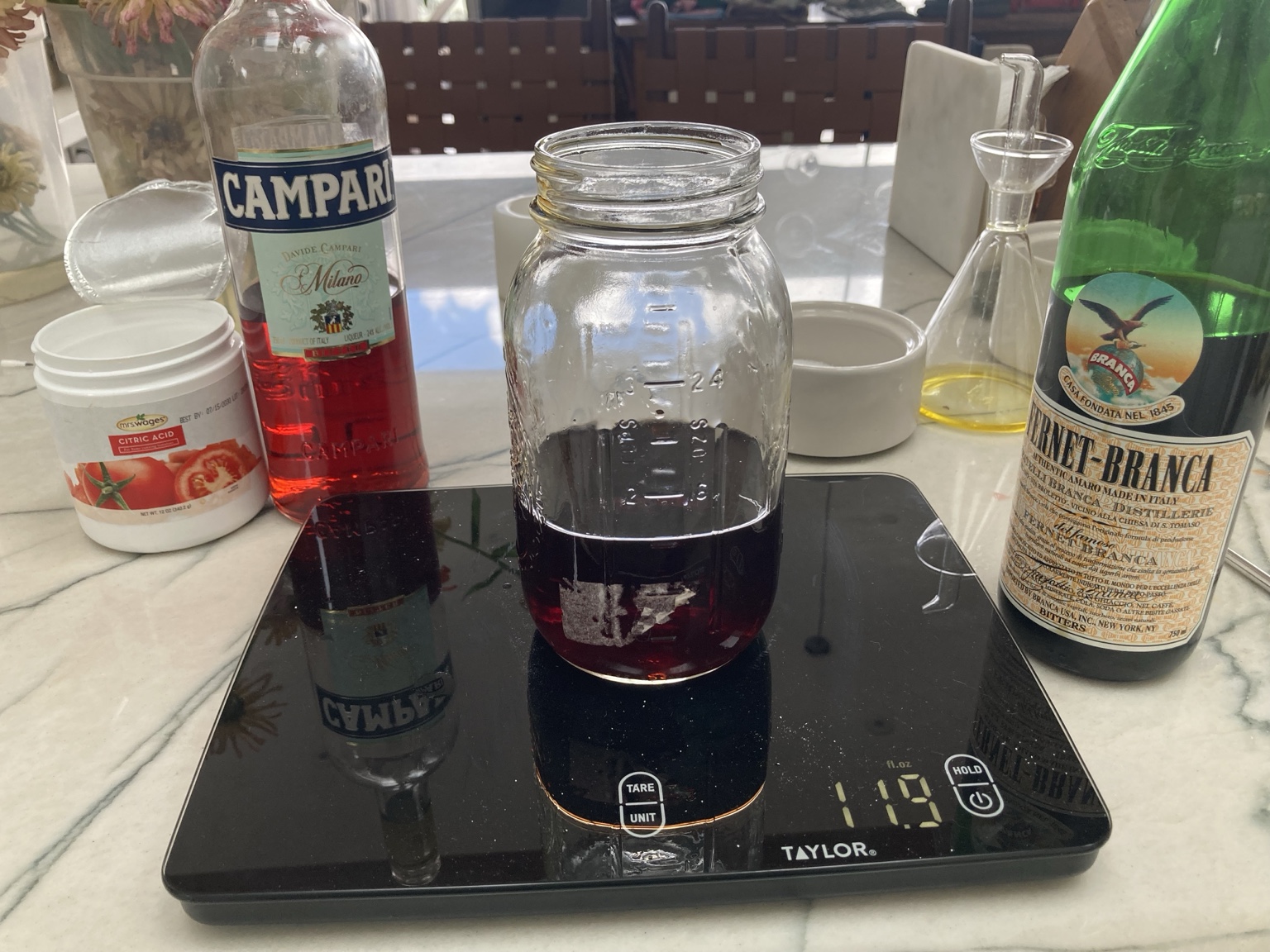
Measure the milk into a separate jar
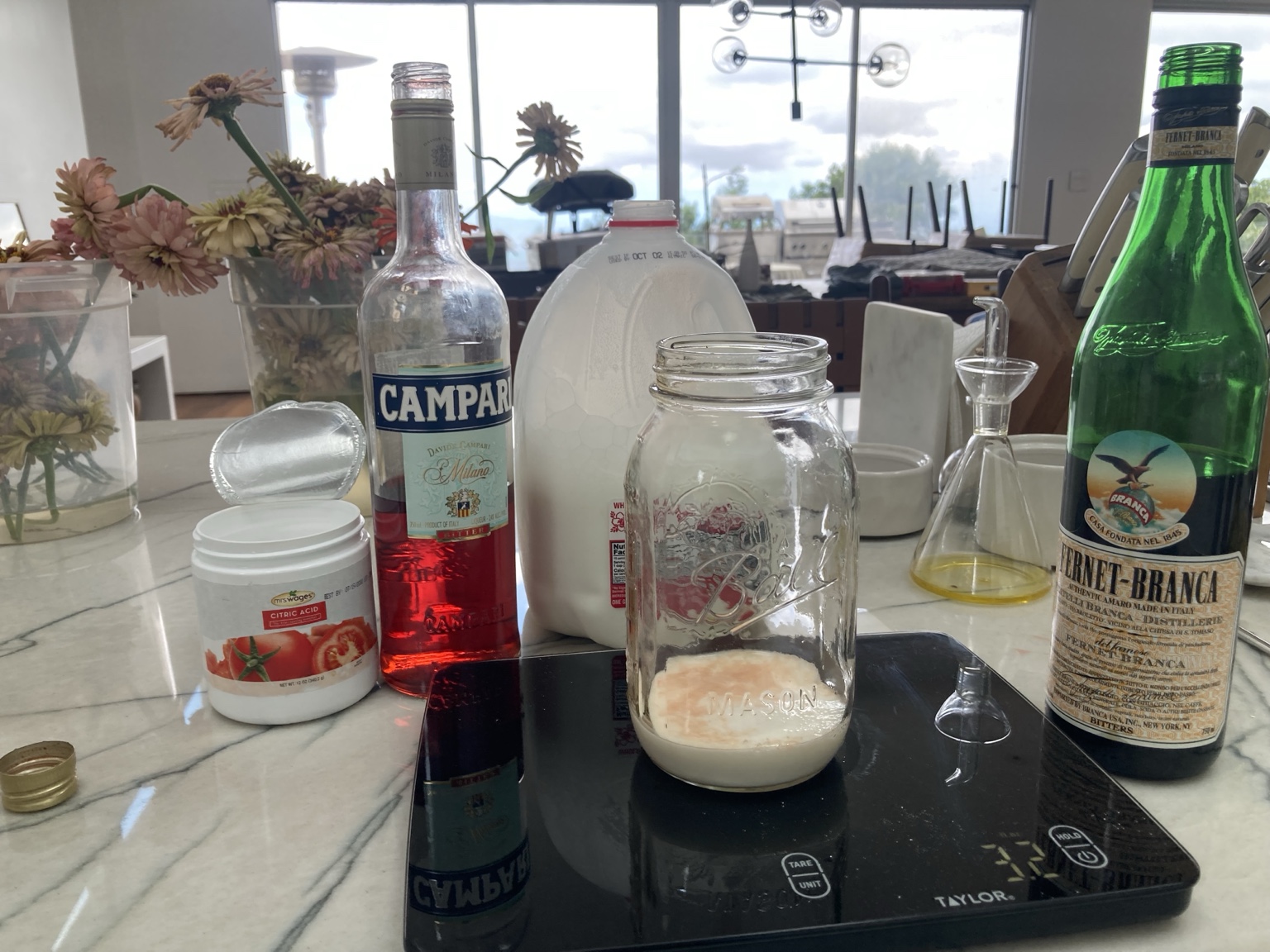
Slowly pour the mixture into the milk
The milk will curdle
Loosely cover and leave undisturbed for 45–60 minutes

Gently pour through a coffee filter set in a funnel over a clean jar
Let it drain without pressing or squeezing the curds
If the first liquid comes through cloudy, pour it back through the same filter once a layer of curds has formed
This layer helps filter the remaining liquid
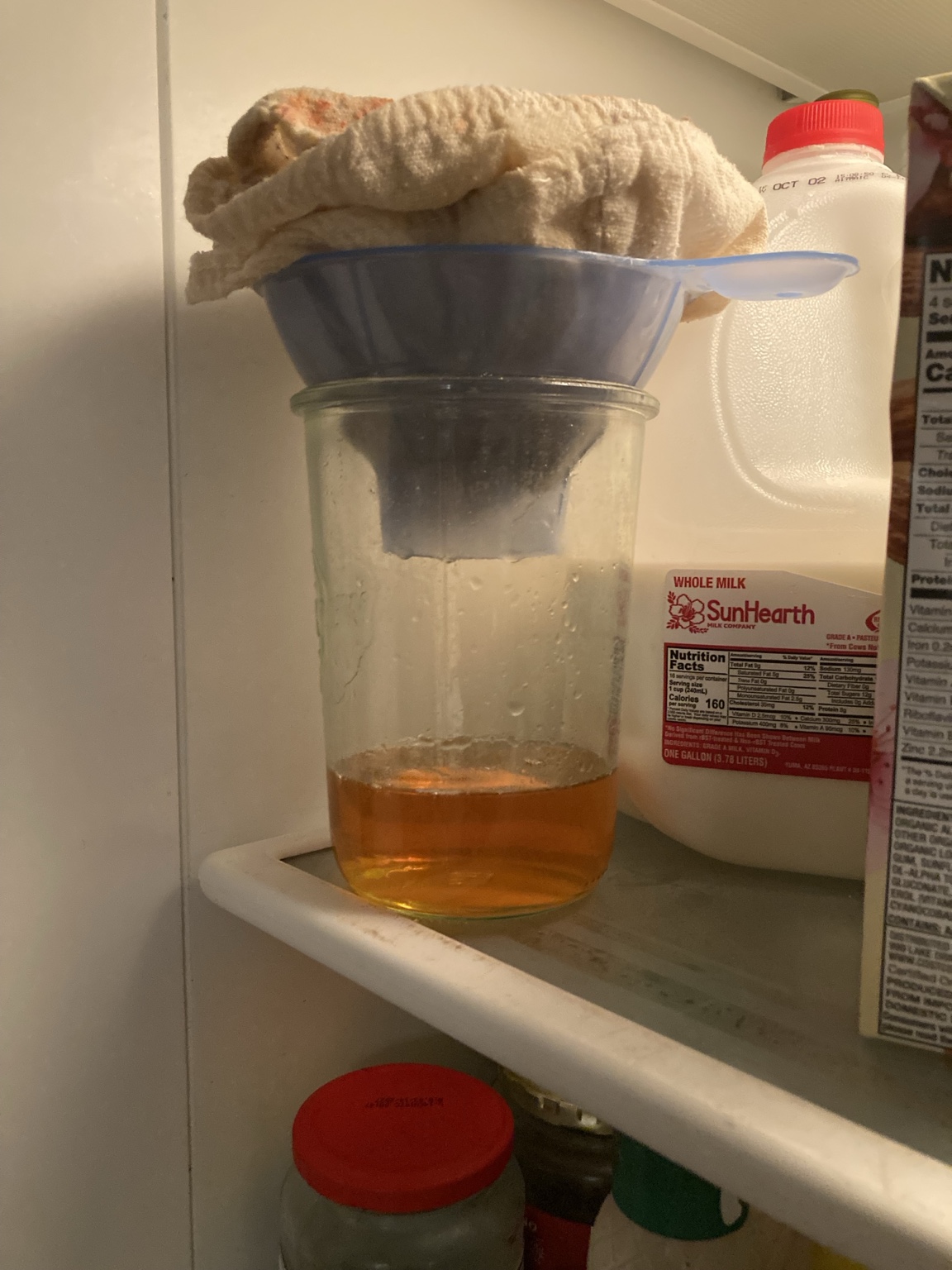
The finished shot is pale and translucent
The clarification process rounds out the bitterness on the front end a bit and still finishes with lots of complexity and bitter notes
Not for everyone because of its bitter intensity, but it’s a pretty pour to keep behind the bar
Bottle and refrigerate
Serve chilled
— Jacob, Blank Discovery
homemade orgeat
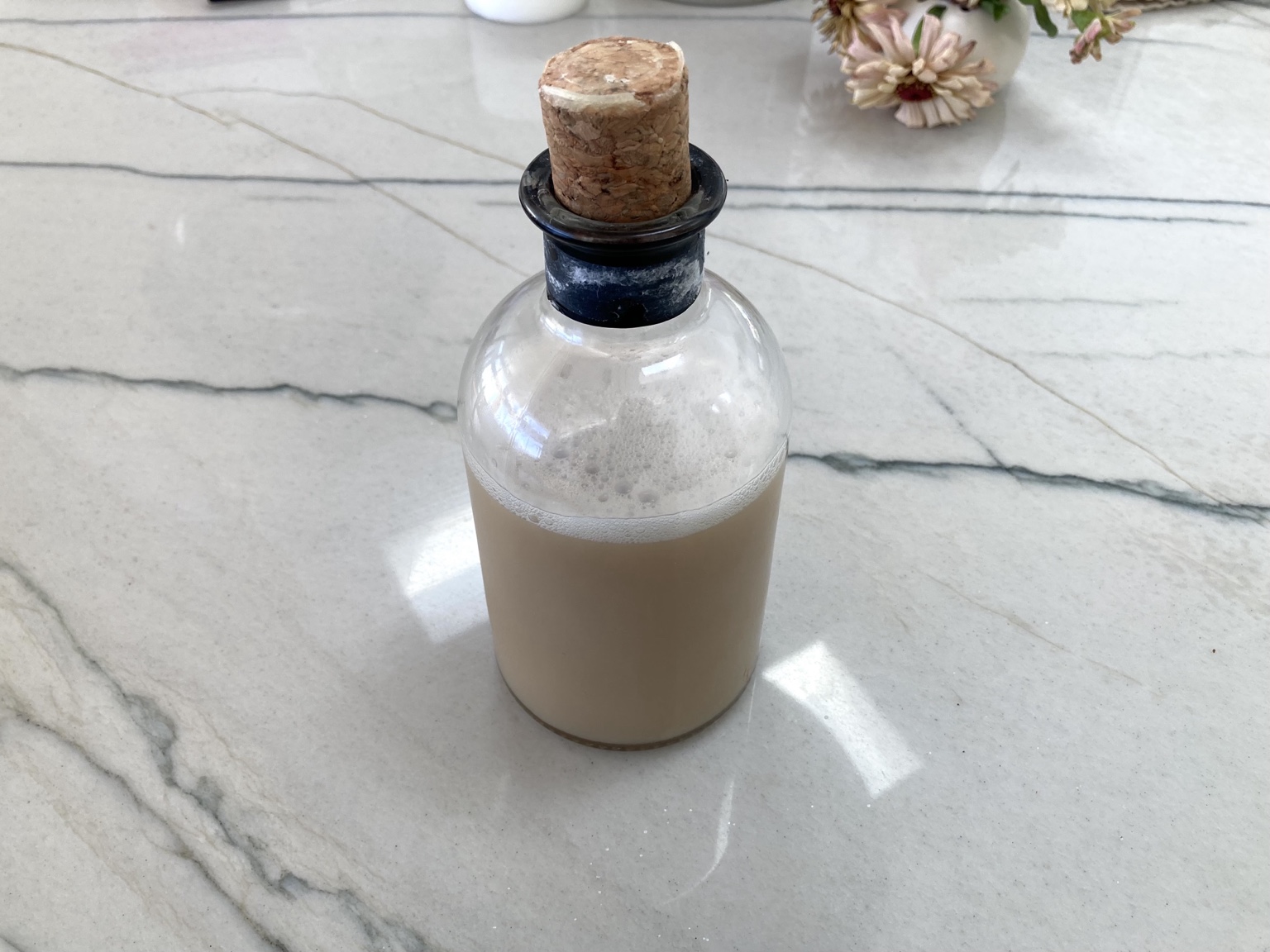
90 g almonds
415 g hot water
248 g sugar — 1½ times the weight of the strained almond milk
Toast the almonds in a dry pan over medium-low heat for around 5 minutes, moving them around until fragrant and lightly browned
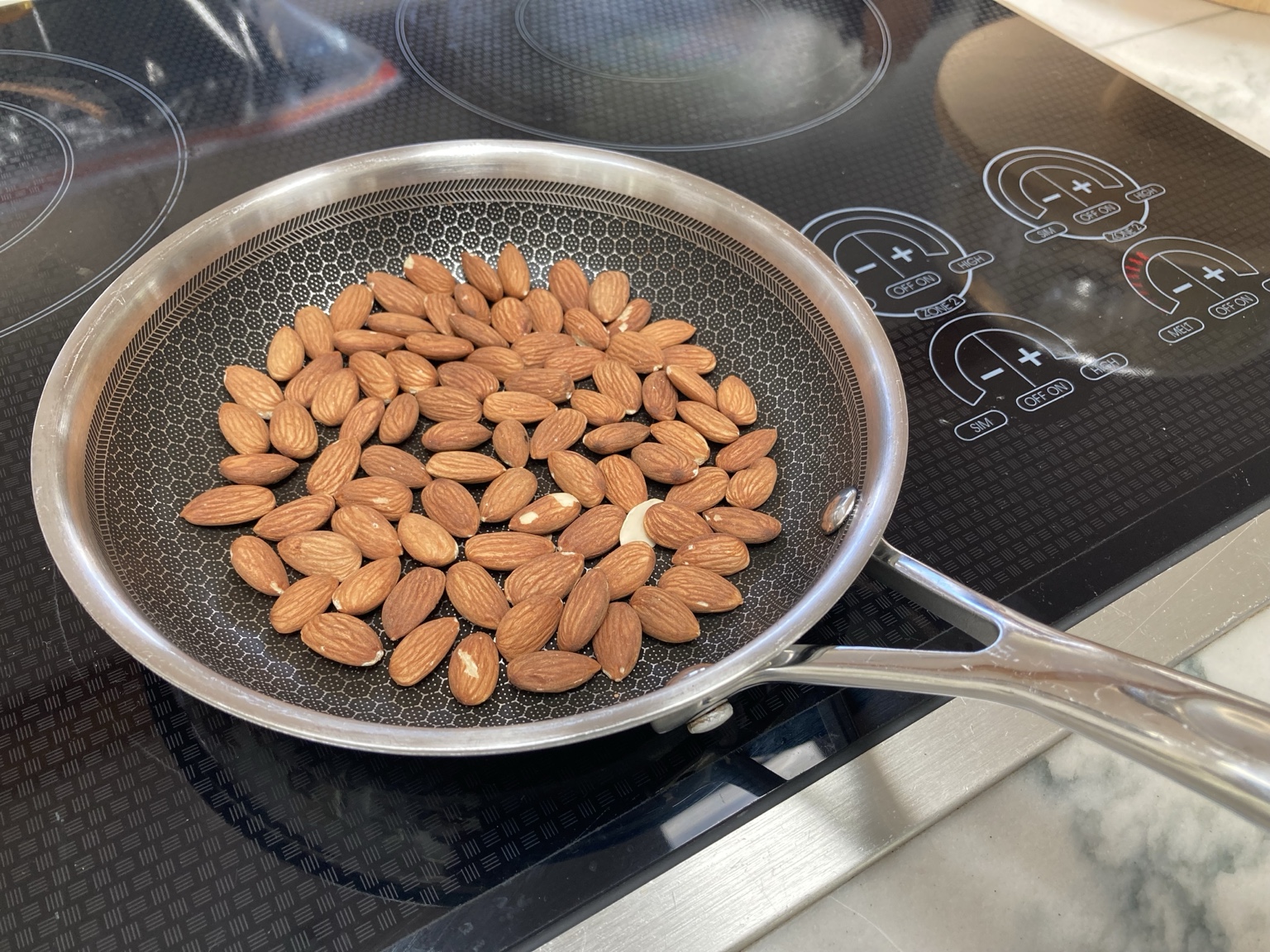
Let the almonds cool (adding them while still hot can cause unwanted bitterness), then add to a blender with 415 g hot water
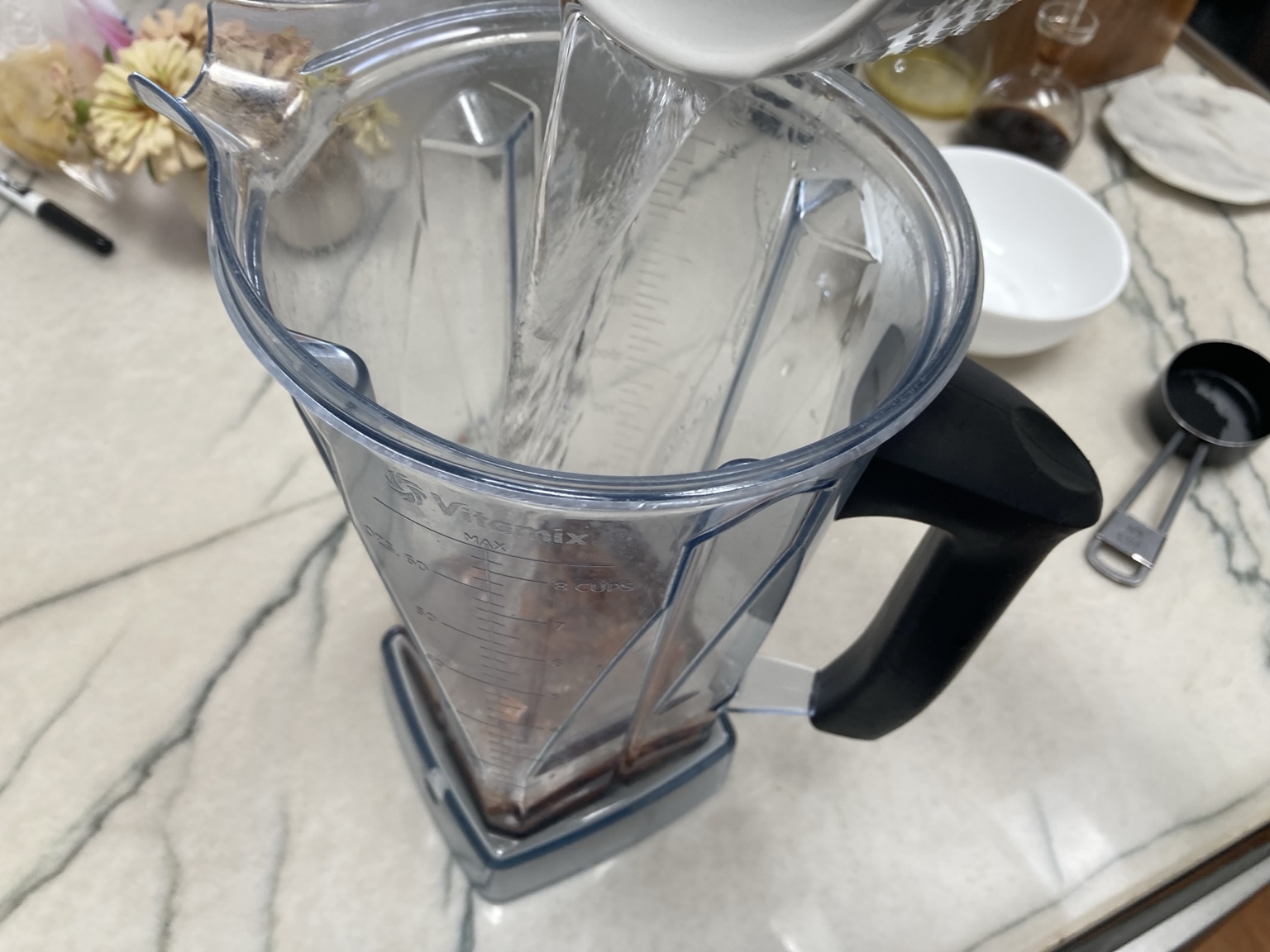
Blend until finely broken down
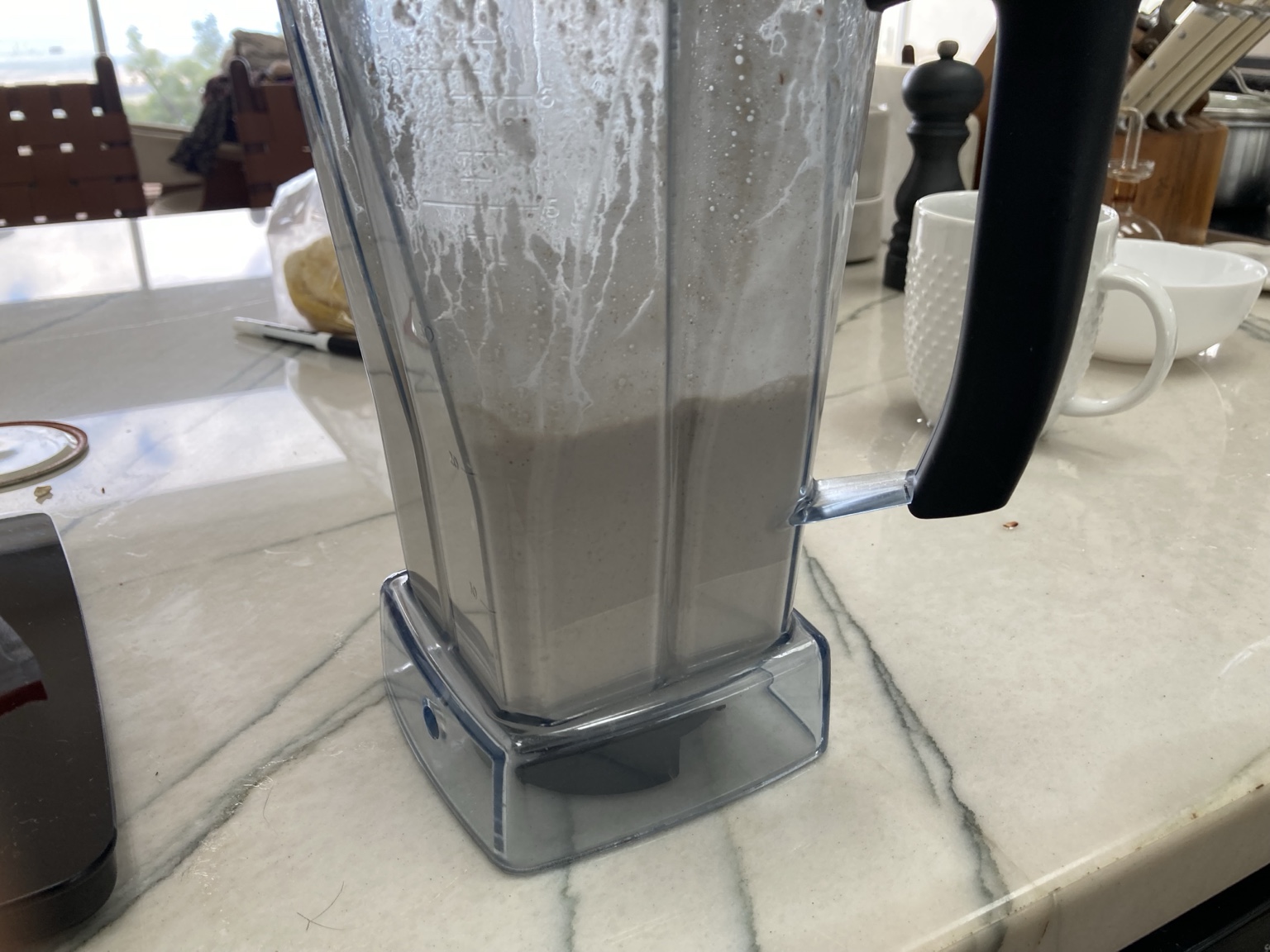
Strain through a nut milk bag or cheesecloth, squeezing out the liquid
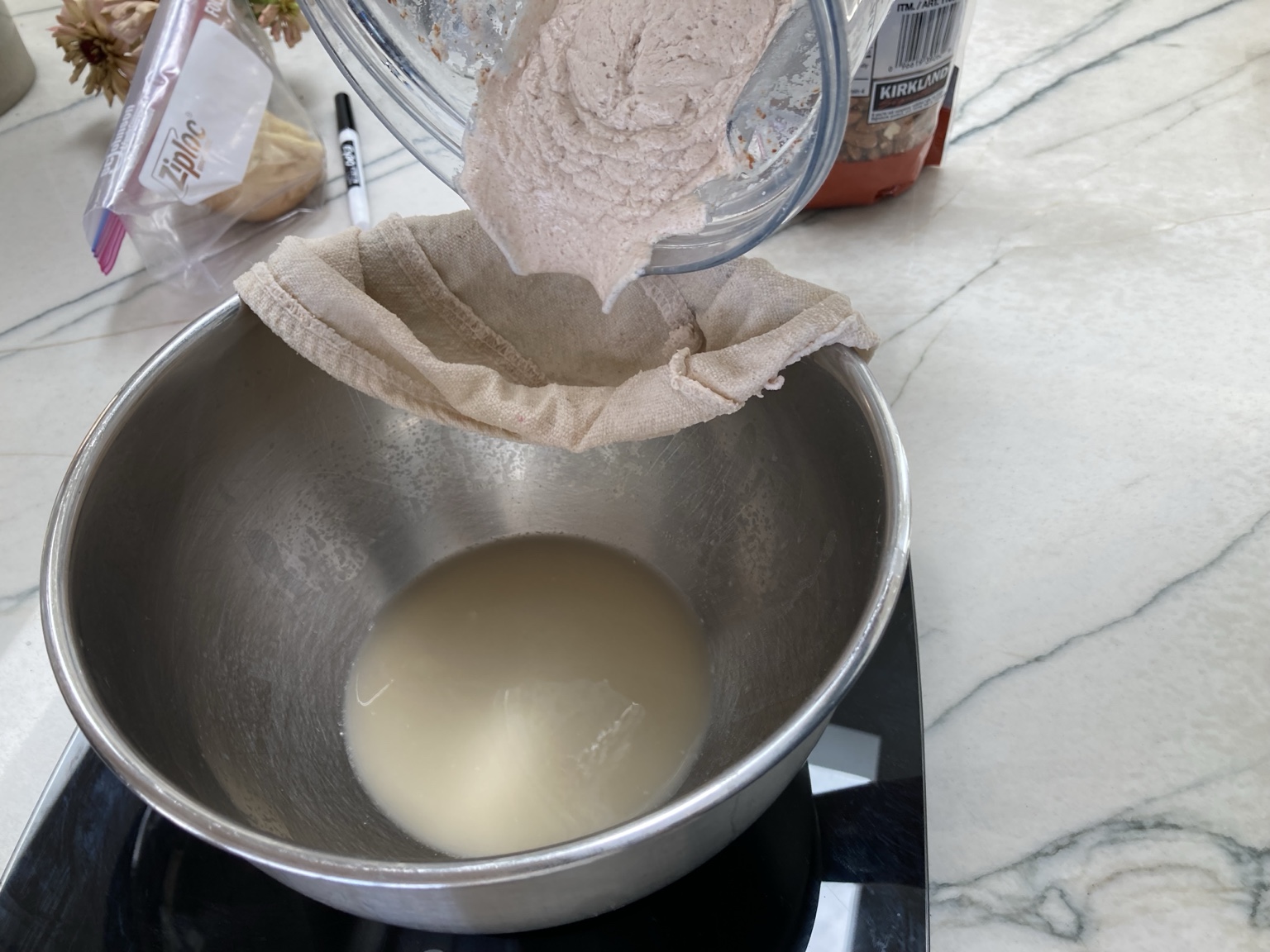
Weigh the almond milk and add 1½ times that weight in sugar
This batch gave me 165 g of almond milk, so I used 248 g of sugar
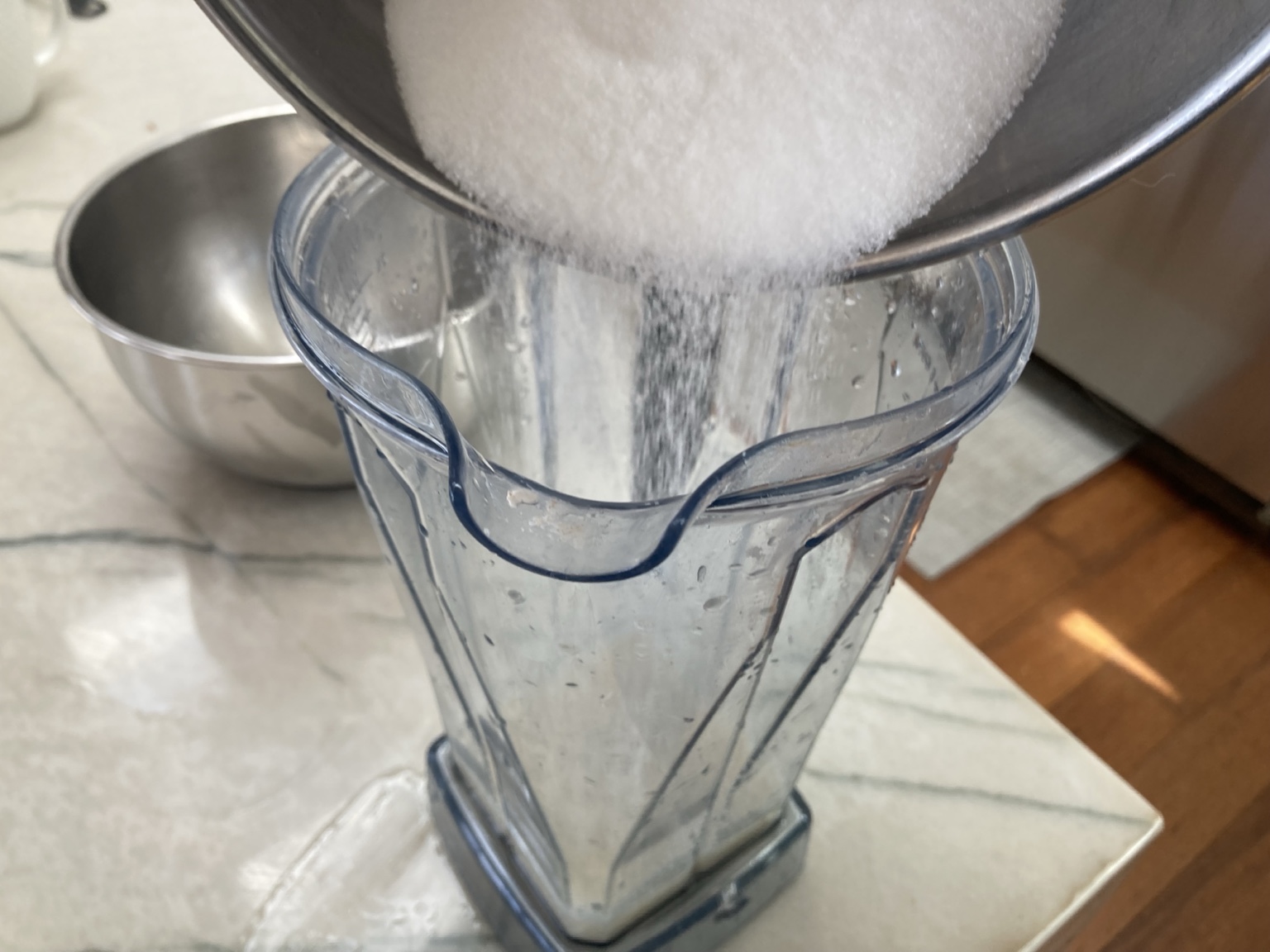
Blend until the sugar has dissolved
Pour into a clean bottle and refrigerate
Shake before using
If you’re making cocktails, try adding a pinch of salt along with 5 g amaretto and 5 g cognac to this batch
— Jacob, Blank Discovery
Hong Kong Chop Suey - Big Island, HI
My cousin had a beautiful ceremony of love and commitment set. We, as a family, had to be there for the most important day of a good man’s journey. It is also important that, when on the Big Island, you enjoy as much Chinese food as you do the still, clear waters near the sands.
We are Chinese food people, my family and I. That is a very annoying thing to say, but it is true. My father, having grown up on Oʻahu, has burdened us with the obsession of a perfect shrimp canton, lemon chicken, char siu, vegetable soup, walnut shrimp, roasted duck, and, of course, lap cheong fried rice—though the list goes on.
On arrival, he chats up the owner (who is always likely to be sat at whatever “table 1” is to them in the shop). This visual trinity of mother-father-daughter, sat facing one another with a sheet of paper, is a telltale sign of a great local Chinese institution. She shared that the locals of Hawaii love and expect a certain thing from great Chinese food, and that it remains much different from the traditional approach. They prepare the food how the locals enjoy it, and for us—it pays off.
The inside feels like a bingo room. The only other family there is a group of 5 elderly locals who will either be attending bingo later or are already here. She gave us five minutes to sit with the menu and guided us as any good, loving, family-like member would: “Ok, too much meat, you need vegetables.”
She’s right. We just ordered six proteins, half of which are fried and covered in some sauce that is majority sugar. Of course, the vegetable soup and eggplant somehow end up being the highlights of the meal, which is beautifully surprising, being that this is probably, overall, the best Chinese food we have had. It all felt like home.
We pigged out, naturally, until we remembered how far we were staying and how much we would love to enjoy the remainder the next day.
Order a lemon chicken. Order whatever you want. Just remember to ask for the vegetable soup and eggplant dish before you leave. Also, have the tea. It’s the Chinese equivalent of the after-meal espresso. It seems essential once indulged in.
To the family at Hong Kong Chop Suey: thanks.
— Jacob, Blank Discovery
What does ‘Pinot’ mean?
In wine, you often see or hear “Pinot” leading the names of grape varieties: Pinot Noir, Pinot Gris, Pinot Grigio, Pinot Blanc. But what does Pinot mean? What does it translate to? Why “Noir”?
Pinot comes from the French pin, meaning pine. The name is thought to refer to the small, tightly packed grape clusters, which can resemble a pinecone.
The -ot makes the name diminutive—a way of communicating something smaller through language, similar to the use of -ito or -ita in Spanish.
Pin = pine
Pinot = little pine
The rest is color.
Pinot Noir = black in French
Pinot Nero = black in Italian
Pinot Gris = gray in French
Pinot Grigio = gray in Italian
Pinot Blanc = white in French
Pinot Bianco = white in Italian
Each pair is the same grape, just named in a different language.
Pine for the resemblance to a pinecone, followed by its color.
A little pine, in black, gray or white.
— Jacob, Blank Discovery
“86”
In the restaurant world, the term “86” means “out”. Whether we’re out of salmon or a drunk guest must no longer be allowed in, it means “out”. I was so curious about how we landed on this code and always assumed it was some computer code within our system. The term originated in American soda-fountain culture and stuck around.
Before cute coffee shops and fast-food joints, American drugstores often had soda-fountain counters where you could sit and order a soda, ice cream, a milkshake, or a small bite to eat. The person behind the counter was called a “soda jerk” because of the motion made while operating the fountain handle.
These “soda jerks” created their own language and code using numbers in place of short phrases. This made service faster and more efficient. Here is a list of codes you may have known back then, documented in 1929:
10 = root beer
21 = limeade
31 = lemonade
41 = orangeade
51 = hot chocolate
86 = all out
89 = look at the woman/customer nearby
“86” was just one number in a larger index. Somehow this language continued and is still used to this day in nearly every operating restaurant.
Thanks, soda jerks.
— Jacob, Blank Discovery